| OCR Text |
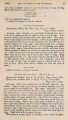
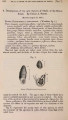
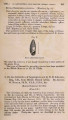
Show 580 REV. H. s. GORHAM ON [June 20, PELONIUM (?) NIGRO-J3NEUM, n. Sp. Nigrum, superne ceneo-nitens ; capiteprothoraceque crebre subtiliter punctatis, nitidis; elytris quam prothorax duplo latioribus creberrime inceyualiter punctatis, punctis ubique confluentibus, pube grisea tenui dense vestitis; abdominis apice pallescente, antennarum articulo primo subtus testaceo. Long. 7-12 millim. Hab. Assam, Patkai Mountains (Boherty). Antennae with the basal joint stout, slightly curved ; second joint short, bead-shaped ; third elongate, compressed ; fourth to eighth gradually shorter, the seventh and eighth being transverse, the latter especially being very short and smaller than the seventh; the ninth and tenth joints large, triangular, subequal, the apical one more oval; the palpi have their apical joints oblong and truncate, wider than the preceding joints, in both pairs. The eyes are reniform, moderately strongly faceted, deeply excised, with a short ridge, beneath which the anteunae take their origin. The thorax has the sides evenly rounded ; it is a little more narrowed in front than behind, the constrictions are obsolete ; it, as well as the head, legs, and sides of the elytra, has a rather long but fine grey pubescence. The punctuation of the elytra is thick and irregular ; the punctures are broken, i. e. the larger ones seem formed of groups of confluent smaller ones ; towards the apex the larger pits gradually disappear. The legs are black, but not deeply so, tbe body beneath and the trochanters tending to be pitchy. Three specimens were obtained by Doherty, one much smaller than the other two, and having the last three joints of the antennae much longer and thinner than in those examples. SlSYRNOPHORUS. Sisyrnophorus, C. Waterhouse, Ent. Mo. Mag. xiii. (1876) p. 125. This singular genus was detected by myself among the Cocci-nellidas at the British Museum-the typical species, S. maculatus, at first sight roughly resembling some species of that family. Two species were characterized by the author-S. maculatus from the Philippine Islands and S. bowringii from Penang. I do not at present see that there was sufficient ground for separating it from Allochotes, Westwood, Trans. Ent. Soc. 1875, p. 241. But anyhow that name appears too close to Allocotus (Fieber), Puton (Hemiptera), Ent. M o . Mag. xi. p. 146 (1874). Westwood describes (loc. cit.) seven species. Ghoresine, Pascoe, to which he compares the genus, belongs to the Melyridae. SISYRNOPHORUS BIRMANICUS, n. sp. Lcete ferrugineus ; elytris metallico-viridihus, nitidis, crebre punctatis. Long. 8 millim. Hab. Burmah, Ruby Mines (Bohertg). Head and thorax rich rusty-almost blood-red, very finely, |