| OCR Text |
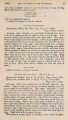
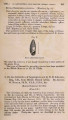
Show 1893.] BRITISH CENTRAL AFRICA. 657 67. ACRiEA PERIPHANES. Acrcea periphanes, Oberthiir, Etudes d'Entom. livr. xvii. p. 20. pi. 2. fig. 23 (1893). * One example, Lake Mweru. Our example is better marked than that of M . Oberthiir, all the spots of the under surface of primaries being strongly defined on the upper surface; the secondaries below more distinctly marked with rosy vermilion on abdominal border, where there is one additional black spot. There can be no question whatever that these differences are due to simple individual variation. In the same livraison M . Oberthiir has described a number of species as new upon which Dr. Holland has recently commented in his paper in the ' Annals of Natural History.' I quite agree with him in his statement that all the varieties of A. proteina and A. kilimandjara are sports of A. johnstoni, Godman. I also consider A. cappadox to be=^4. bonasia, A. strattipocles 3 = sambavae, Ward; A. comw^'=probably a variety of A. fornax, Butl.; A. serena-mclas a melanism of A. bonasia ; A. chceribula= n. sp. near to A. caldarena; A. masaris § =A. monteironis, Butl. A. regalis is allied to, but distinct from, A. brcesia, Godm. We have the species represented in the Museum collection. Of other Acrceas recently described to which attention should be drawn are A. albomaculata, Weymar, Stett. ent. Zeit. 1892, p. 82, which is=-4. ligus, Druce, and A. ombria, Weymar, I. c, which is =A. ccddarena, Hew. 68. ACR.EA CALDARENA. Acrcea caldarena, Hewitson, Ent. M o . Mag. xiv. p. 52 (1877). Acrcea nelusca, Oberthiir, Etudes, livr. iii. p. 25, pi. 2. figs. 2, 3 (1878). Acrcea amphimalla, Westwood in Oates's 'Matabele-Land,' pi. E. figs. 1, 2 (1881). Acrcea ombria, Weymar, Stett. ent. Zeit. 1892, p. 82. o* 2 , Zomba, July 1892 ; 3, Lake Mweru. I cannot agree with Trimen in referring A. nelusca to A. doubledayi: in the first place the male, although with a slightly smaller black apical patch than usual to the primaries, also lacks the longitudinal grey streaks on the internervular folds, which are very characteristic of A. doubledayi 3 \ the female, moreover, is quite typical, and, as Trimen says, in it " there is no trace whatever of the subapical whitish bar of doubledayi 2 •" In the present collection one female corresponds with O.berthur's figure, whilst another is smoky grey, with the central third of the primaries occupied by a broad oblique snow-white belt. 69. ACRCEA ACRITA. Acrcea acrita, Hewitson, Exot. Butt, iii., Acr. pi. 3. fig. 18 (1865). 3, Lake Mweru. |