| OCR Text |
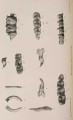
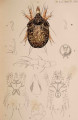
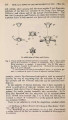
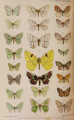
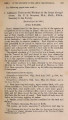
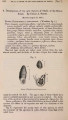
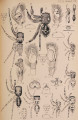
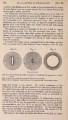
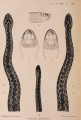
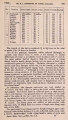
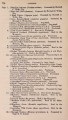
Show 666 DR. A. G. BUTLER ON LEPIDOPTERA FROM [Nov. 7, 116. BELENOIS DIMINUTA, sp. n. (Plate LX. fig. 7.) 2 • Allied to the preceding species; considerably smaller; the white spots on apical area enlarged, almost confluent, so as to divide it into an inner irregular oblique black band; a quadrate black spot on second median interspace and a dentated grey-brown external border, widest at apex; the black discocellular spot rather smaller than in B. crawshayi and the silvery basal area of wider extent: secondaries immaculate, the fringe slightly brownish : apical area below testaceous, the oblique band and quadrate spot of the upper surface represented in brownish grey, but the outer border obliterated : secondaries dull creamy stramineous, whiter on the veins ; a faintly indicated testaceous spot on the lower discocellular and two or three very indistinct testaceous A-shaped markings representing the submarginal line of the preceding species. Expanse of wings 50 miUim. Lake Mweru. I should have preferred to regard B. diminuta as the female of B. crawshayi, but females in this genus are usually as large as or larger than males and always have better defined markings ; that there should be a solitary exception to this rule seems in the highest degree improbable. 117. HERP^ENIA ERIPHIA. Pieris eriphia, Godart, Enc. Meth. ix. p. 157, n. 134(1819). Rhodesia, Lake Mweru, June 12, 1892. 118. GLUTOPHRISSA SABA. Papilio saba, Fabricius, Spec. Ins. ii. p. 46, n. 199 (1781). 3 2 > Bake Mweru. 119. NEPHERONIA THALASSINA. Pieris thalassina, Boisduval, Sp. Gen. i. p. 443, n. 8 (1836). 3, Lake Mweru. 120. ERONIA LEDA. Eronia leda, Doubleday, Gen. Diurn. Lep. i. p. 65 (1847). 3, Lake Mweru. 121. ERONIA CLEODORA. Eronia cleodora, Hiibner, Samml. exot. Schmett. ii. pi. 130 (1816-36). Lake Mweru. Herr Weymar (Stett. ent. Zeit. 1892) has redescribed my E. dilatata under the name of E. cleodora, var. marginata. 122. PAPILIO LURLINUS. Papilio lurlinus, Butler, Ann. & Mag. Nat. Hist. ser. 5, vol. p. 106, n. 12 (1883). Mipa stream, Mofwi, August 3, 1892 (R. 0.). The type of this species was received from the Victoria Nyanza. |