| OCR Text |
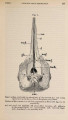
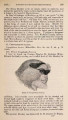
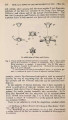
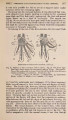
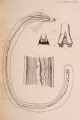
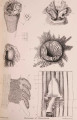
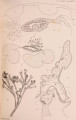
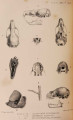
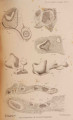
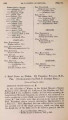
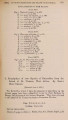
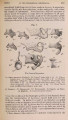
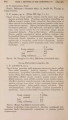
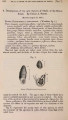
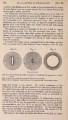
Show 174 ON THE CORACOIDAL ELEMENT IN ADULT SLOTHS. [Feb. 14, marked c in both are homologous; each articulating with the lower border of the front of the scapula, from which they are partially separated by a foramen (/), and each entering into the formation of the glenoid cavity. N o w in the Dicynodont the bone marked c has usually been identified with the precoracoid. According, however, to Professor Howes ' the latter term should be restricted to a portion of the clavicular arch, and the name epicoracoid applied to the element under consideration. This emendation, if properly authenticated, I should of course have been willing to accept, had it not been for another consideration. Apart from that consideration, w e must call the coracoidal element in the shoulder-girdle of the Sloth the epicoracoid. This is in harmony with the conclusion of Professor Howes, who in the paper cited (p. 404) observes that " the coracoid process of the Marsupialia and Placentalia is the homologue of the Monotreme's epicoracoid." When, however, he proceeds to add that the exclusion of this epicoracoid from the glenoid cavity is one of its most characteristic features, I must take leave to differ from him. It is true that in the Monotremes (as shown in fig. 3 of the drawing) the so-called epicoracoid (c)-which all are agreed as representing the epicoracoid of the Dicynodont-is excluded from the glenoid cavity; but this appears to m e to be due to its having been pushed forwards and bent downwards into the ventral plane of the body. Both the Dicynodont (in spite of what is urged by Professor Howes) and the Bradypodine so-called epicoracoid enter to a small extent into the formation of the glenoid cavity2. W e have it, then, that the human coracoid process is homologous with the so-called epicoracoid of Bradypus, Dicynodon, aud Echidna ; while the element termed coracoid in the two latter, as articulating with the sternum, represents the element so named in the Sauropsida. Here, howTever, as has been pointed out to me by m y friend Mr. Thomas, a new difficulty arises. The coracoid element was first named from the coracoid process of man, and therefore, undoubtedly, the bone which we have called epicoracoid is the true coracoid; while the element to which the latter term is applied in the Monotremes and Sauropsida is properly a meta-coracoid. In spite of the difficulty w7hich will probably arise in obtaining the adoption of the latter term for the posterior ventral moiety of the Sauropsidau pectoral girdle, I therefore suggest that w e must for the future term that element the metacoracoid, and restrict the term coracoid to the coracoid process of the higher Mammals and the bone which has been termed epicoracoid in Monotremes and Dicynodonts3. 1 Journ. Anat. Phys. vol. xxvi. p. 403 (1893). 2 I may mention that I am indebted to Professor Howes for pointing out that I have incorrectly identified the acromion in the scapula of Bicynodon, the true acromion being tbe one lettered a in the accompanying figure. 3 Professor Howes has been good enough to point out to me that Sabafier has identified a rudiment of the metacoracoid in tbe human scapula (see Howes, op. cit. vol. xxi. p. 190). |