| OCR Text |
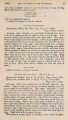
Show 60 ME. E. Y. WATSON ON THE HESPEEIIDJE. [Jan. 17, 30. Genus CTENOPTILUM. Ctenoptilum, de Niceville, Journ. Bomb. Nat. Hist. Soc. vol. v. p. 220 (1890). Type, vasava, Moore. Antenna?: club rather robust, gradually thickened, recurved, finely pointed. Palpi very conspicuous, porrect ; third joint fairly robust, Ions, slightly curving downwards, bluntly pointed, .tore wing: costa straight, apex broadly truncate; inner and outer margins subequal; cell almost two-thirds the length of costa; vein 12 reaching costa far before the end of cell; vein 8 usually given out beyond the end of cell-that is, veins 7 and 8 anastomose for a portion of their basal length (this is not an invariable character ; the length of the anastomosis varies in different specimens, and occasionally, though very rarely, veins 7 and 8 are free for their entire length) ; discocellulars taken together forming a curve, the lower the longer ; vein 3 shortly before the end of cell ; vein 2 considerably nearer to vein 3 than to base of wing. Hind wing: outer margin'with a tooth-like projection at vein 7 and a second more prominent one at vein 4 ; from this latter projection to the anal angle the margin is perfectly straight, thus giving the wing a very squared appearance. Neuration of hind wing much as in Odontoptilum. Hind tibia? with two pairs of spurs, the upper pair minute. Male with a long tuft of hair attached to the proximal end of hind tibia?. vasava, Moore 1. multiguttafa, de Nicev 2. This genus is closely allied to Caprona and Odontoptilum ; the sharply pointed antennse, however, will at once separate it. Confined to Asia. 31. Genus TAPENA. Tapena, Moore, Lep. Ceyl. i. p. 181 (1881). Type, thwaitesi, Moore. Antennse: club moderate, hooked, tip acuminate. Palpi conspicuous, porrect; third joint, short, obtusely conical. Fore wing : apex broadly truncate ; inner and outer margins subequal : no costal fold in male; cell less than two-thirds the length of costa; vein 12 reaching costa before the end of cell ; discocellulars suberect, the lower the longer; vein 3 shortly before the end of cell; vein 2 about twice as far from end of cell as from base of wing. Hind wing: outer margin sinuate, produced at vein 3, giving the wing a squared appearance; vein 7 well before the end of cell; discocellulars and vein 5 faint; vein 3 immediately before end of cell; vein 2 considerably nearer to end of cell than to base of wing. Hind tibise with two pairs of spurs. Male with a tuft of long hairlike scales attached along the inner side of the hind tibise. The species agni differs from the type in the outer margins of both wings being even, but agrees with it in all other respects. thwaitesi, Moore .., 1. agni, de Nicerille 2. |