| OCR Text |
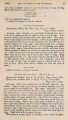
Show 176 ON THE RANGE OF THE EUROPEAN BISON. [Feb. 14, poachers is a very difficult one for him and his mounted under - keepers, and one which has not been attended with much success : one is always hearing the news that individuals of the few remaining herds of the Bison have been killed. As the extirpation of the Bison here in its last retreat in the Caucasus will undoubtedly soon take place, I had already, nearly 10 years ago, drawn out apian, which would not only enable me to shoot one or two specimens ( cf, 2 )» but also to thoroughly describe the animal both externally and internally, and to record everything of anatomical importance by illustration and description. I should also like to add to this an account of its habits, the places it frequents, discuss the hunting of it, and give all available information on the Caucasian Bison. It would likewise be necessary to compare it with a specimen from Grodno. The skeletons and skins should be preserved and mounted. Such a monograph as this would be of great value to the next generation, when the Bison will be numbered with the extinct animals. To accomplish this thoroughly an anatomist, with a knowledge of the construction of the animal, must come and stay on the spot, as well as a photographer and an artist. The carrying out of this good idea has unfortunately been put off from year to year ; however, it is probable f hat in 1893 it will be accomplished. It is necessary to be on the spot by the end of August, for in September the animal ascends the mountains to from 7000 to 8000 feet high, and it being very cold then, there would be no fear of the flesh decomposing quickly. The anatomist should remain on the spot until the animal is dissected, and everything measured, noted, figured, and observed. The smaller soft parts could be put in spirit or preserved w-ith salt. When the work has been so far advanced, it would be advisable to make a stay in Psebai with the materials. The rough skeleton and skin could be prepared here and packed ready for transport. Such an affair as this to be properly managed could not be undertaken in Tiflis, but only at St. Petersburg. Here, as in many other things, w e are deficient in literature as well as in material for comparison. All that is known of the Caucasian Bison previous to 1867 will be found recorded in a small work of m y late father-in-law, Dr. J. F. Brandt: it was published in Band ii. (Ser. 2) of the ' Yerhand-lungen der russisch-kaiserlichen mineralogischen Gesellschaft zu St. Petersb.'pp. 101-152, under the heading of " Dombe-Adombe." There is also another article by the same author in the ' Bulletin de la Soc. Imp. d. Nat. de Moscou,' 1866, No. 1, in which he compares, as far as possible, the Caucasian Bison with that of Grodno. The example of the Bison which is mounted in our Museum was presented in 1868 by Count Sumarakow Elston, at that time Governor of the district of Kuban; there was, however, a young specimen in the Museum in 1867, but this was very much damaged and was disposed of after the reception of the second example. The Tiflis specimen is an old bull: it has a very poor mane and the |