| OCR Text |
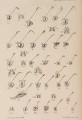
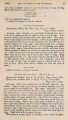
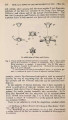
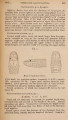
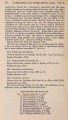
Show 208 DR. C. J. FORSYTH MAJOR ON MIOCENE SQUIRRELS. [Feb. 28, should say, the traces of, a primitive arrangement of its tubercles of upper molars in three longitudinal series, there being two rows in the lower molars. This paper does not pretend to enter into details as to other families and orders. But I think it important to state in a few words that this tendency of older forms towards a longitudinal arrangement is quite general in Rodents as well as in Creodonts, Lemuroids, and Ungulates. Iu Sciuridee w e have very primitive forms still existing side by side with those more specialized, so that the transverse arrangement does not at first sight appear to be a later transformation. The Lagomorpha are in this respect, as in others, highly instructive, the molars of the living members being very specialized. I hope to show fully on another occasion that the structure of the molar form of Lagomorpha is to be traced back from the perfect transverse direction presented by their enamel-ridges to a pelycodoid type of molar, that means, to a molar approaching closely to those of Pelgcodus, a mammal from the Lower Eocene of North America and Egerkingen in Switzerland. which has hitherto been considered to be a Lemuroid. In a somewhat lesser degree, the Lagomorphan molar tends towards Estho-nyx, considered by Cope T to be one of the progenitors of Rodentia. The intermediate stages are the unworn milk-teeth, premolars and molars, of young Lepus, the Miocene Palceolagus, Lagomys, the Pleistocene, Pliocene, and Miocene Myolagus, and the Miocene Lagodus. The anterior upper and loAver premolar of Lepus, the second superior and the auterior inferior premolar of Lagomys, the superior premolars and more or less all the superior molars of Myolagus, as well as the inferior anterior premolar of the latter, show, even in adult specimens, a conformation which points unmistakably towards a longitudinal arrangement of partially sharp-edged cusps-these cusps being three longitudinal series separated by two longitudinal grooves in the upper teeth, and two series with one intermediate longitudinal groove in the lower molars. The difference between the first lower premolar and the other grinding-teeth is very striking, especially in Myolagus, for which I refer to a figure from Filhol's memoir on the Sansan fauna". As to other Orders, I must be satisfied to give a few instances. Amongst recent Carnivora, the Subursi, especially Ailurus, and partially the Ursidse themselves, show unmistakably the longitudinal arrangement of their molar cusps. In the same direction the milk-teeth of several Ordera point significantly, even those of modern Ruminants. In the Lower Eocene many molars of various Orders tell the same tale as to their origin, often in a distinct manner. In favour of m y view I refer to the following figures :-First, from Cope's 1 E. D. Cope, " The Mechanical Causes of the Development of the Hard Parts of the Mammalia" (Journal of Morphology, vol. iii. Boston, U.S.A. 1889, p. 263). 2 ' Etudes sur les Mammiferes fossiles de Sansan ' (Paris, 1891), pi. i. fig- 8. |