| OCR Text |
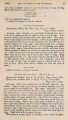
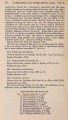
Show 1893.] MR. M. F. WOODWARD ON MAMMALIAN DENTITION. 451 specimens in which the teeth were already cutting the gum far too old, taken alone, to determine the true tooth relationships. His principal conclusion is that the 3rd incisor, on account of its lateness in cutting the gum, must belong to the 2nd dentition; this, as I shall show later, is quite erroneous. II.-OBSERVATIONS ON THE SPECIMENS. Having a very fine series of Macropid embryos at my disposal, some from Prof. Parker's collection and others received through the kindness of Mr. Fletcher of Sydney and Dr. Symington of Edinburgh, I propose to commence my tooth studies with that group, as being one of which I can give the most complete account. The following forms have been investigated :- Macropus giganteus, 9 specimens. „ bennettii, 1 specimen. „ eugenii, 2 specimens. „ brachyurus, 2 specimens. Petrogale penicillata ?, 6 specimens. „ sp. inc., 2 specimens. Bettongia lesueuri, 1 specimen. JEpyprymnus rufescens, 2 specimens. Unfortunately, in the case of the Petrogales I am somewhat uncertain about the species, as the embryos collected by Mr. Fletcher of Sydney seem according to his account to be P. penicillata, while the same name was given me by Dr. Symington for his specimen; nevertheless, I have no hesitation in saying that they are two distinct species, both, however, being Rock-Wallabies. As a rule, the exact species would not perhaps matter very much, but in this case it is a very vital matter, as the P. penicillata of Mr. Fletcher was the most interesting and least specialized of all Macropids with regard to its tooth arrangement, so much so that I shall commence my observations on that form. Before proceeding to the detail observations, I should wish to enforce the importance of Prof. Huxley's method of observation by dissection under clove-oil, given in my previous paper (P. Z. S. 1892, p. 40). This method, employed side by side with examination by means of serial sections, I hold to be very important and assists one materially in interpreting the latter, although taken alone it may be very misleading. One may simply clarify and sketch the jaw before decalcifying and sectioning, and in this way gain a good idea as to what teeth, especially vestigial ones, are present. Or, better still, where one can afford to utilize both halves of the head of the foetus, one can carefully dissect one half in oil of cloves and so obtain a complete model of the developing teeth (generally consisting at this stage of enamel organs only), both in relation to the gum and to the maxilla and premaxilla, while one obtains a complete series of sections of the other half. |