| OCR Text |
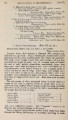
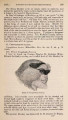
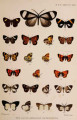
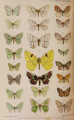
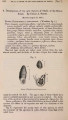
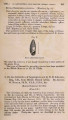
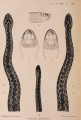
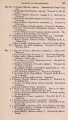
Show 416 MR. W. WARREN ON NEW GENERA AND [Apr. 18, concave basewards, the outer of a similar series of curves concave outwards, and forming a sharp tooth below the costa, and a bilobed projection on the 1st and 2nd median nervules, containing a black blotch; discal spot small, blackish; a sinuous short blackish streak from the apex, its base connected with the tooth of the outer edge of the central fascia by a longitudinal tawny stripe; the costa from the base to the central fascia, a small blotch near the base on the inner margin, and some irregular clouds along the hind margin tawny. Hind wings the same, but with a small dark blotch on the inner edge of the central fascia, and none at all on the outer; discal dot hardly visible; no apical streak. Underside like upper, but duller. Head, thorax, and abdomen concolorous. Expanse of wings 38 millim. Hab. Sikkim. [I have only seen a single male, which was taken in the interior by Moller's collectors.-H. J. E.~] Subfam. EUBYJIN^E. Fam. Amphidasydce, Guen. Phal. i. p. 191. EUBYJODONTA, gen. nov. Allied to Euhyja, Hiibn., but differing in the outline of the wings and in the structure of the 6* antenna?. These are stoutly pectinated for |, then simple; each pectination is stiff and bristly, nearly at right angles with the shaft and finely ciliated along its whole length, giving a filmy appearance to the whole antenna?. Tongue weak; palpi hardly visible. Fore wings elongate, narrow; the costa being nearly twice as long as the inner margin; costa itself nearly straight, curving only just before apex; apex rounded, broadly blunt; hind margin very oblique, twice concave, with a slight prominence between the 2 concavities between the ends of the 2nd and 3rd median nervules. Hind wings with 2 concavities, the intervening prominence being greater and rounded. Type, Eubyjodonta falcata, sp. n. EUBYJODONTA FALCATA, sp. n. 3. Fore wings white with an ochreous tint, thickly sprinkled with irregular black flecks which in parts become confluent into blotches; the lines indicated by olive-tawny blotches; basal line represented by a curved tawny fascia broad on the inner margin, and not reaching the costa, followed on costa and inner margin by a black blotch ; 2nd line, at ^, parallel to hind margin, represented by a thin, irregularly-blotched olive-tawny fascia, preceded on costa and inner margin by a blackish blotch, and followed by an interrupted series of irregular black blotches, that extends from costa to inner margin; >liind margin occupied by 5 or 6 irregular-sized olive blotches, that below the apex being far the largest; a deep black cell-spot. Hind wine;s like fore wings but with less |