| OCR Text |
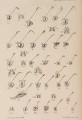
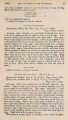
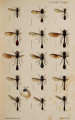
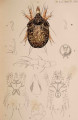
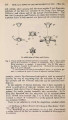
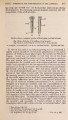
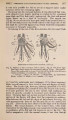
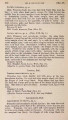
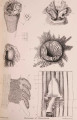
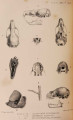
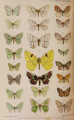
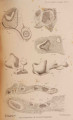
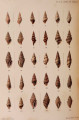
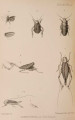
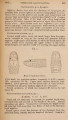
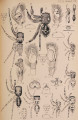
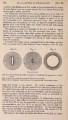
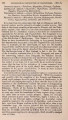
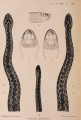
Show 182 DR. 0. J. EORSYTH MAJOR ON MIOCENE SQUIRRELS. [Feb. 28, types before mentioned-the Sciurus vulgaris and the Xerus types, as w e may call them-are each of them derived from a brachydont type. 1. Therefore, beginning with the type of the most brachydont Sciurine molar, as being the most generalized, the various forms belonging to it have a very flat elongate crown, the inner and outer sides of which have an almost equal longitudinal extension; and a minimum of transverse arrangement of their cusps, which show a tendency towards a longitudinal disposition. 2. In the upper molars of the Sc.-vulgaris-type a transverse arrangement is already conspicuous. The cusps have partly united to form transverse ridges, so that w e see here the beginning of a transition from bunodontism into lophodontism: four more or less transverse ridges, the two median being the stoutest, with three intervening valleys. On the outer side are three prominent cusps, corresponding to the three anterior ridges. A characteristic feature on the inner side of the upper molars is an apparently single cusp, which fits into the cup- or basin-shaped hollow of the inferior molar, somewhat like a pestle in a mortar. In examining, however, quite unworn teeth (of Sc. vulgaris, e. g.), the inner side of the upper molar presents itself more elongate and shows a tripartite division, the median cusp being the stoutest. Still more is this seen in the upper molars of most of the middle-sized Oriental Squirrels, which in other characters (of the skull &c.) as well as in the dentition approach Sc. vulgaris. The molars, however, are somewhat stouter, and the cusps and ridges more prominent. In unworn teeth of Oriental forms, e. g. of Sc. prevosti (Plate VIII. fig. 2) or Sc. lokroides (Plate VIII. fig. 3), the inner margin is rather elongate, and shows more distinctly than does Sc. vulgaris the tripartite division with a prominent medial cusp. W h e n the teeth have become somewhat worn, these divisions tend to disappear; so that the usual aspect of worn upper teeth in these Oriental Squirrels is that presented by the somewiiat worn teeth of Sc. vulgaris, viz., a single broad internal cusp. The shortening, or, as one might say, the reduction and simplification of the inner side of the upper molars compared to the outer side (and, as m a y be added, of the outer side of inferior molars compared to their inner side) appears to be a general aud primitive tendency of molar teeth ; in fact, w e meet with it already among Cretaceous Mammalia, as well as in the recent Ornithorhynchus. As to its meaning, we shall have to consider it afterwards. In lower molars of the Sciurus-vulgaris-type, two cusps, the antero-external and the antero-internal, show a tendency to unite transversely. Anteriorly to these we have a small transverse valley, bordered in front by a transverse ridge, which is more rarely (Sc. palmarum) raised in two cusps. In the premolar there is generally one cusp only in front. The hinder part of inferior molars is shaped into a sort of cup, to receive, as above mentioned, the internal tubercle of the upper |