| OCR Text |
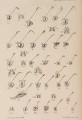
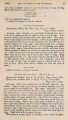
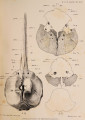
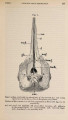
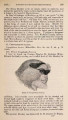
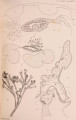
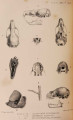
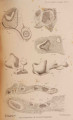
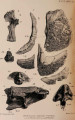
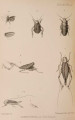
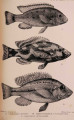
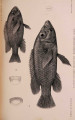
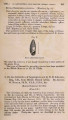
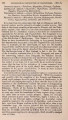
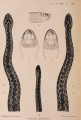
Show 564 MR. A. SMITII W O O D W A R D o:>r T H E [June 20, tion of Bapedius already published by Dr. Traquair x suffices for the purpose ; but the cranium itself is shown only in one specimen from Lyme Regis (Brit. Mus. no. P. 3511), which seems worthy of description as an appendix to the foregoing account of Lepidotus. As seen in side view (Plate L. fig. 3), the basicranial axis of Bapedius is sharply bent upwards in front of the otic region-an arrangement perhaps correlated with the deepened form of the fish. As in Lepidotus, the cranial cartilage is well ossified, and there seems to have been a complete, or nearly complete, interorbital septum. The basioccipital element (b.occ.) is deep, much excavated behind for the notochord («./.), and longitudinally grooved below for the basicranial canal (bc.c). The divisions between the elements of the cranium and the situation of the foramina for the nerves are unfortunately not distinguishable ; but it is clear that there was an ossified supraoccipital (s.occ), with a vertical median ridge behind, and there are robust ossifications in the prefrontal and postfrontal regions. The ethmoidal region (e.) terminates in front in a small blunt process, pierced transversely by a large foramen; and it expands on each side, in advance of and below the prefrontal, into a great mass that would be sheathed by the vomer. The olfactory nerve evidently passed through a foramen (/.) between the prefrontal and ethmoid, there being no elongation of this foramen into a canal. Of the membrane-bones of the cranial roof, the parietals, frontals, and squamosals are fused into a continuous plate (pfs.); while, as in Lepidotus, a narrow rim of the cranium projects behind the covering thus formed. Viewed from behind (Plate L. fig. 3 a, m.), there is seen to be a small cavity on each side between the cranium and the squamosal portion of the roof, this being evidently the reduced temporal fossa. III. CONCLUSION. From the observations now recorded it would be premature to make any very general deductions, the characters of the skull having yet to be discovered in the majority of the Mesozoic fishes. The new facts, however, are interesting as tending to confirm a conclusion that must have impressed everyone who has deeply studied these extipct fishes, namely, that it is impossible in Jurassic and early Cretaceous formations to recognize any absolute subdivision of the so-called Ganoids into " Lepidosteoidei" and " Amioidei." The skulls of Lepidosteus and Bapedius differ from those of existing " ganoids " in exhibiting the backward extension of the basicranial canal; and the cartilaginous cranium of Bapedius is remarkably similar in every respect to that of the modern salmon (Salmo), except somewhat more ossified. Both Lepidotus and Bapedius agree with Lepidosteus and Amia in the fact that the membrane-bones of the roof do not extend quite to the occipital 1 B. H. Traquair, " On the Structure and Affinities of the Platysomicla:," Trans. Boy. Soc. Edinb. vol. xxix. (1879) pi. vi. fig. 13. |