| OCR Text |
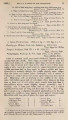
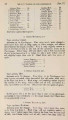
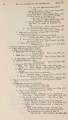
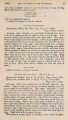
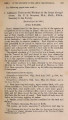
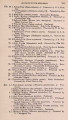
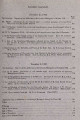
Show 686 MR. E. C. REED ON CHILIAN [Nov. 7, ODYNERUS AMBIGUUS. 2 • Odynerus ambiguus, Spin. 1. c. p. 264 (1851). 3 • Odynerus bustillosii, Sauss. in Gay, vi. Supp. p. 567 (1852). This and the two following species belong to Wesmael's subgenus Ancistrocerus. 0. ambiguus is probably a common and variable species, of which I have many specimens and varieties, but no specimens that I have seen agree fully with the description. ODYNERUS SCABRIUSCULUS. Odynerus scabriusculus, Spin. 1. c. p. 262 (1851). The original description of this species in Gay's work is so thoroughly bad, like many other descriptions in that work, that in the Latin diagnosis a male is described as the female, and the Spanish part is full of absurd errors. De Saussure afterwards published a fair description from the type that exists in the Paris Museum. This species is local, but not uncommon in Colchagua. ODYNERUS YICINUS, sp. nov. Allied to 0. scabriusculus, but larger, less coarsely punctured, with a yellow band on the scutellum. 2 . Slender, head and thorax strongly punctured, 1st and 2nd segments of the abdomen finely punctured; anterior margin of prothorax recurved, angles rounded. Suture on 1st abdominal segment well defined, angular in the middle. Black, shining, head and thorax densely covered with short reddish hairs ; antenna; reddish beneath; legs pitchy, tarsi and knees reddish. A small spot behind the eyes, anterior margin of prothorax, tegulae, a spot near root of wing, the posterior margin of the scutellum, posterior margin of the first two abdominal segments, yellow. A small but distinct tubercle exists beneath the 1st abdominal segment; _ 2nd segment not tuberculated, but thickened anteriorly, the elevation forming a ridge. The tooth on posterior margin of the metathorax is very distinct, but hardly so large as in 0. scabriusculus. Length 11 millim., wing 6 millim. One specimen caught near Valparaiso. ODYNERUS EXCIPIENDUS. Eumenes excipiendus, Spin. 1. c. p. 266 (1851). Odynerus arcuatus, Sauss. Vesp. i. p. 160 (1852). Thiu species, according to the original description by Spinola, has the terminal joints of the male antennae red, as in my specimens. But Saussure, in his 'American Wasps,' makes his 0. colocolo, with terminal joints black and a tubercle on the upper side of the 2nd abdominal segment, to be the true 0. excipiendus. I have never seen 0. colocolo, so cannot say whether it is a good species or not, but my specimens of 0. excipiendus, Spin., fully agree with Spinola's description and with the description of 0. arcuatus. |