| OCR Text |
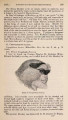
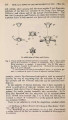
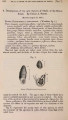
Show 1893.] ME. E. Y. WATSON ON THE HESPEEIIDJE. 95 its greatest development in the islands of the Archipelago ; the peculiar form of the antennal club readily distinguishes it. TARACTROCERA NICEVILLEI, sp. nov. Above dark brown, spotted with yellow. Fore wing with a lunate spot at end of cell; a subapical spot divided into three by veins, a spot below this and close to the outer margin divided into two, and a triple spot extending from the upper median branch to as far as the submedian parallel to the outer margin, but further removed from it than the double spot above mentioned ; these three spots form a sort of submarginal baud from the costa to the inner margin, though not reaching either, the middle spot being much nearer the margin than the other two. Hind wing : a lunate spot at end of cell, and a submarginal series of three spots, the first small, the second out of line, being nearer the margin of the wing, and the third double. Underside markings as above, the whole of the hind wing and the apex and costa of the fore wing washed with yellow. Cilia above and below pale yellow. Expanse 24 millim. In the British Museum, from Bombay. This is the species which has been recorded from India by Col. Swinhoe as coras of Cramer. The true coras of Cramer is, however, an American species and is the type of the genus Polites, Scudder. Nearest allied to T. ceramas, Hew., from which it differs in the much greater prominence of all the yellow markings. 2. Genus AMPITTIA. Ampittia, Moore, Lep. Ceyl. i. p. 171 (1881). Type, maro, Fabr. Antennse short; club moderate, straight, tip blunt. Palpi: second joint densely clothed with laxly set scales ; third joint porrect, conspicuous, slender, tip bluntly conical. Fore wing: inner margin longer than outer margin ; cell less than two-thirds the length of costa; vein 12 reaching costa well before the end of cell; middle discocellular longer than lower one; vein 5 slightly nearer to 4 than to 6; vein 3 in the male of the type species well before the end of cell, nearer to 2 than to 4 ; vein 3 in the female immediately before the end of cell; vein 2 nearer to end of cell than to base of wing ; lower margin of cell curved upwards from base to vein 2, and angled at vein 3. Hind wing evenly rounded ; vein 7 shortly before end of cell, curving upwards from its origin, the upper margin of cell curving downwards, the angle therefore being rounded like a tuning-fork and not acute ; discocellulars very faint; vein 5 not traceable ; vein 3 from end of cell; vein 2 shortly before end of cell, considerably more than twice as far from base of wing as from end of cell. Hind tibise with two pairs of spurs. Male in the type species with a short glandular streak on the |