| OCR Text |
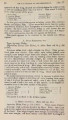
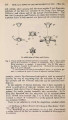
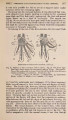
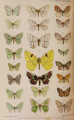
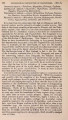
Show 1893.] SPECIES OF MOTHS FROM INDIA. 395 2 lines marked, where it crosses each vein, by a black dot. Hind wings the same, but without the yellow basal patch ; fringes white, short. Head and thorax yellow; the latter with black spots. Abdomen straw-yellow, with dorsal, lateral, and ventral row of black spots. Antennae blackish. Underside white, with the cell-spots conspicuously black, but without the transverse fasciae; fore wing with costal and subcostal areas blackish. The markings in the 2 are darker than in the 3 . Expanse of wings 36 millim. Hab. Sikkim. [Taken in the interior by Moller's collectors, probably at a high elevation.-H. J. E.~] Subfam. ENNOMIN^E. PANISALA OLIVESCENS, sp. n. 2 . Ground-colour pale hoary grey, finely dusted with olive-brown atoms; a fine oblique straight basal line, parallel to the hind margin; median line parallel to it, from before the middle of the costa to before the middle of the inner margin, followed by a diffuse, olivescent shade, which fades into the ground-colour before the 3rd line, which starts from the costa halfway between the 2nd and the apex, is curved outwards, not inangulated, near its origin, and then runs back nearly straight, so as almost to touch the 2nd line on the inner margin; space beyond to the hind margin olivescent-brown, except below the costa, with a faintly paler submarginal fascia-form space. Hind wing like fore wing, but with no basal line, and with the 2nd and 3rd lines not nearly touching each other on the inner margin. Underside dull yellowish grey, lighter in the hind wings. Head, thorax, and abdomen pale whitish grey. Hab. Sikkim. Slightly larger than P. truncataria, Moore. [Though the colour of this species is very different from that of P. truncataria, the pattern is the same. I have a male taken by Knyvett in April which matches the type female in colour. All my specimens of P. truncataria which are dated were taken in July and August, so this may be the early brood of it.-H. J. E.] HOLOLOMA, gen. nov. Distinguished from Panisala, Moore, by the structure of the 3 antennae. In Panisala the lateral branches forming the pectination are simple, thin, long, and projected obliquely forwards; in Hololoma they are short and blunt, and stand out nearly at right angles with the shaft, each having 2 fine short cilia at the apex, and finely ciliated laterally, these ciliations giving a filmy appearance to the whole pectination. The apex of the hind wing is either plainly rounded off or very faintly incurved, without the deep excavation that occurs in Panisala. |