| OCR Text |
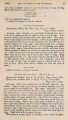
Show 318 THE SCIENTIFIC NAME OF A HTMALAYAN CUCKOO. [Mar. 28, in all probability would have been had its range extended to Travancore. There is, however, one mention of its occurrence in the Wynaad by an excellent and trustworthy observer, the late Mr. W . Davison (' Stray Feathers,' x. p. 359) ; but I think this supposed occurrence may be thus explained. Mr. Davison's note is as follows : - " Sparingly distributed in the Wynaad. I should think that it was a permanent resident, as I have heard it calling late in May." I infer from this and from the fact that there is no Wynaad skin in the H u m e Collection that Mr. Davison, who was collecting for M r . H u m e , did not obtain a specimen, but only heard the call. But a reference to ' Stray Feathers,' xi. p. 70, shows that Mr. Hume's (and consequently, it is reasonable to conclude, M r . Davison's) belief was that the call of the Himalayan Cuckoo was something like " Kyphul-pakkha " \ and the name Kyphul-pakkha is applied by some of the Himalayan people to a Cuckoo. According to Hutton, however (Blyth, Cat. B. Mus. As. Soc. p. 71, who is confirmed by Bingham and Marshall, Ibis, 1884, p. 411), this note is produced by C. micropterus, which doubtless occurs in the Wynaad, and it would be very difficult to tell the Himalayan Cuckoo from C. micropterus without shooting the bird. Jerdon (B. I. i. p. 323; Ibis, 1872, p. 12) has clearly shown that the call of the Himalayan Cuckoo is quite different, and his account is confirmed by that excellent observer Col. C. H . T. Marshall. I came to the above conclusions more than a year ago, but before publishing them I thought it best to enquire into this question thoroughly. I therefore wrote to Mr. Davison, then living at Singapore, and asked him whether he could remember if he had ever shot the Himalayan Cuckoo in Southern India or whether he had only heard the note. He replied to me in a letter, which is, I regret to say, the last I can ever receive from one of the very best field-naturalists w ho have helped in working out the ornithology of India, and said that he did not procure a specimen of this Cuckoo when he was collecting for Mr. Hume, but he thought he obtained one later in a collection he made for the Madras Museum. I therefore wrote to Dr. Warth, who was in charge of that Museum, and asked him to ascertain for me whether the Museum possessed any skin of the Himalayan Cuckoo. Dr. Warth very kindly took particular pains to ascertain tbe facts, and he wrote that not only was there no specimen of the species in the Museum, but that, to the best of his knowledge and belief, no specimen had ever been obtained iu Southern India. This was confirmed by M r . Daly, who has an extensive knowledge of South Indian birds. I think, after this evidence, it is impossible to come to any other conclusion than that tbe Himalayan Cuckoo does not occur in Southern India, and that Vabl's C. intermedius must have been C. poliocephalus. As none of the names hitherto employed for this Cuckoo apply to it, the question arises as to the earliest undoubted term. The 1 That is, in Hindustani, the Kyphul (or fruit of the K y tree) is ripe. |