| OCR Text |
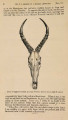
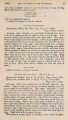
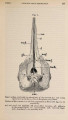
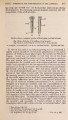
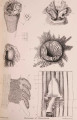
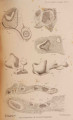
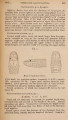
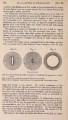
Show 1893.] MR. F. E. BLAAUW ON ARAMIDES YPECAHA. 531 groove that the foramen for the nutrient artery is placed on the posterior surface of the limb. In the abnormal specimen there is no median groove, but on either side of the middle digit there is such a groove, indicating the lines of demarcation between the parts of the metacarpus belonging to each of the three digits. The groove between the middle and external digit is very slightly the deeper of the two, and in it is placed the foramen for the nutrient artery on the posterior surface. The specimen was an old one and no particulars as to parentage or to the condition of the other limbs were to be had. It was mentioned that this case differed from that of the three-toed C ow described by Neville Goodman, ' Journ. Anat. and Phys.' 1868, in that there was in the present example an almost perfect symmetry about the middle axis of the foot. The following extracts from a letter addressed to the Secretary by Mr. F. E. Blaauw, C.M.Z.S., of 'sGraveland, Hilversum, Holland, were read :- " Last autumn I obtained a pair of Aramides ypecaha. I kept the birds indoors during the winter and turned them out in spring into an out-of-door aviary, in which is a small rockery that served formerly for Hyrax capensis. In the first days of M a y I observed that the male bird collected straw, hay, and bundles of grass that he uprooted with his strong bill, and brought it all to the very top of the rockery, where in a depression between the stones he made a flat nest of the said materials. As the female did not appear to take much notice of the exertions of the male, I was a little doubtful as to the result, but as the birds were extremely noisy at that time I retained some hopes. On the 16th I observed the female sitting on the nest, and on the 17th the keeper informed m e that there was an egg in the nest. As the birds were very much excited and the male bird attacked furiously everybody he could reach, the number of eggs laid was not then ascertained for fear of disturbing the birds, but it was afterwards found that the number was four. As soon as the eggs were laid the birds began to incubate, the female mostly during the night and the male during the day, and the birds sat so loosely that the slightest thing would disturb them. If a person approached the nest or the aviary when the male was sitting, it would come down directly to attack the intruder. If the female happened to be on the nest she would keep motionless and wait till you turned your eyes from her, when she would vanish like a shadow. If you happened to turn your eyes on her before she had had time to get quite clear away, she would stop in the position she was in, sometimes with a leg half stretched out, and keep quite motionless till you again turned your eyes from her, when she would take care to be quite away before you looked round again. " As incubation advanced the birds began to sit closer and were not so easily tempted to abandon their task, and on the 21st day of incubation the head of a young bird was seen peeping from under |