| OCR Text |
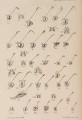
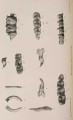
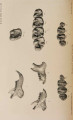
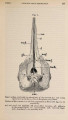
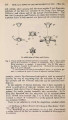
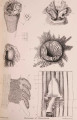
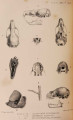
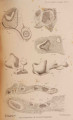
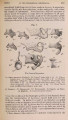
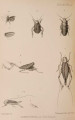
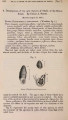
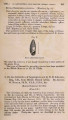
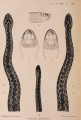
Show 508 MESSES. BEDDARD AND PARSONS ON [June 6, studied chiefly the ambiens muscle, the carotids, the gall-bladder, and the condition of the oil-gland ; with the help of the variations afforded by the structures he propounded a scheme of classification of the group differing in many important particulars from the classifications in use before: he did not discuss, in the paper to which we now refer, the relations of the Parrots to other groups of birds ; in this respect we shall follow his example and confine ourselves to an attempt to indicate affinities between different members of the group in the light of the facts which we record here for the first time. W e prefer, however, rather to lay stress upon the new anatomical facts than to insist too much upon the accuracy of the grouping of the birds to which they appear to lead. It is very remarkable that Garrod should in this particular case have ignored the characters afforded by the syrinx, an organ which he was very fond of studying and using as a help to decide vexed questions of affinity: thanks chieflv to his interest in this organ we have been able to examine a very large series of syringes of many of the principal genera, which he collected together during his tenure of the Prosectorship of this Society ; to these a few were doubtless added by Forbes, and we have carefully preserved those of such birds as happened to die during the course of the present research ; so that on the whole we can claim to have seen a fair number of illustrative genera ; the organ, too, in our opinion shows useful, because easily definable, characters for systematic purposes. W e shall commence by giving some account of the syrinx in a number of illustrative genera. § Syrinx. The syrinx of the Psittaci seems to show two main varieties. a. In the following species there is a syrinx of the type which is dlustrated in Plate X L . figs. 4, 5 (Cacatua cristata) :- Cacatua cristata. triton. philippinarum. Microglossa aterrima. Calyptorhynchus banksi. Stringops habroptilus. The syrinx is in these species remarkable for the fact that the first semirings of the bronchi are weak and cartilaginous and are usually separated from each other by considerable tracts of membrane. Cacatua itself represents the most extreme type ; in Cacatua cristata, for example (see Plate X L . fig. 4), when the syrinx is seen on a lateral view the membrane occupies a great deal of the outer lateral region of the commencement of the bronchus. The figure to which we have just referred exhibits the syrinx with the intrinsic muscles cleaned away, but the point of attachment of the muscle is indicated by the circle (a in the figure); it will be seen from an inspection of that figure that the semirings of |