| OCR Text |
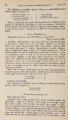
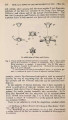
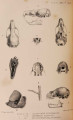
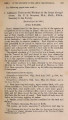
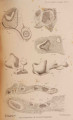
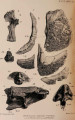
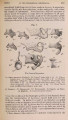
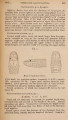
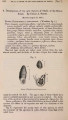
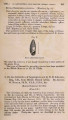
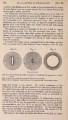
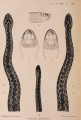
Show 636 MR. E. A. SMITH O N LAND AND FRESHWATER [NOV. 7, Mr. Dall observes, " If it were not for Martini's name it likely that the name Bulimus, Scopoli, would have to be adopted for this genus." This appears to me an entirely wrong conclusion, for Scopoli at the reference cited (Introd. Hist. Nat. p. 392) neither described nor referred to any species of the genus in question, and the figure in Swammerdam's work (Bib. Nat. tab. ix. fig. 4) does not represent Vivipara fasciata as stated by Dall (he cannot have seen the work), but is a fairly characteristic representation of a Limncea, apparently L. stagnalis. I do not for a moment believe that Scopoli intended that Bulimus was to be regarded either as distinct from or an emendation of Adanson's Bulinus. I regard it as merely an oversight in the spelling, or a printer's error. If he considered it distinct, surely he would not have put Adanson's name after it; moreover he clearly tells us (Delic. Flor. et Faun. Insub. 1786, p. 67) that, following Adanson, he calls certain shells " Bulimos." I think the preceding remarks fairly answer Mr. Dall's question as to " how we can avoid retaining Scopoli's name Bulimus for the species Helix tentaculata, Linne," now classified under Gray's genus Bythinia, for, if we take the figure of Swammerdam as his type, Bulimus would then replace Limncea, and if we select the first species he quotes (Helix putris) it would take the place of Succinea. The objection raised by Mr. Dall against using Viviparus on the grounds that there is an impropriety in making the " bearer of living young" a male, is of little importance. Perhaps it would have been fortunate had Montfort used the feminine termination; but as he did not, I, for one, prefer to let the genus remain Viviparus as originally published. 14. VIYIPARUS MWERUENSIS. (Plate LIX. figs. 5, 6.) Testa umbilieata, conica, in medio carinato, tenuis, subpellucida, pallida, epidermide fugaci tenui olivacea induta ; anfractus subceleriter accrescentes, oblique tabulati, superne obtuse striis spiralibus plus minus punctatis tenuissimis confertis, incrementi obliquis decussatis sculpti, ultimus ad peripheriam conspicue et subacute carinatus, inferne concentrice punctato-striatus; spira conica, turrita, ad apicem acuta; apertura angulatim rotundata, longit. totius \ haud cequans, antice subacuminata, paulo effusa ; peristoma tenue, margine dextro obliquo, ad carinam angulata, late sinuato, columellari arcuato, anguste expanso et reflexo. Longit. 37 millim., diam. 30 ; apertura 17 longa, 16 lata. Var. PAGODIFORMIS. (Plate LIX. fig. 7.) Testa sub epidermide tenui plus minus rosacea, anfractibus planiusculis, inferne suturam forte carinatis, pagodiformibus, et apertura in medio labri acute angulata. Hab. Lake Mweru (R. Crawshay). This is one of the most interesting shells in the collection, and belongs to that group of the genus Viviparus which I at one time considered distinct, and described under the name Neothauma. |