| OCR Text |
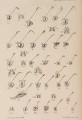
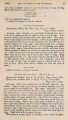
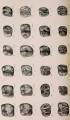
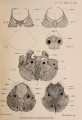
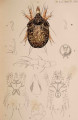
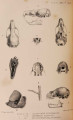
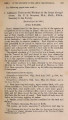
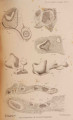
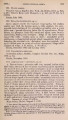
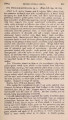
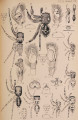
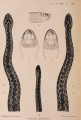
Show 1893.] DR. 0. J. EORSYTH MAJOR ON MIOCENE SQUIRRELS. 183 molars. This is a common form of inferior sciuromorph molar, as we meet with it, not only amongst most of the species of Sciurus, but as well in Tamias, Spermophilus, and Arctomys. The cup is bordered by the two anterior cusps, by two posterior cusps, of which the internal is generally less developed or suppressed, by a posterior heel, and sometimes by two secondary cusps between the two pairs of principal cusps. Sometimes the basin-shaped appearance becomes more evident still by the coalescing of all these cusps, so that already in quite unworn teeth, e. g. of the interesting Se. everetti, Thomas (Plate IX. fig. 4), the rounded margin of the basin appears perfectly even. In the Sciurus-vidgaris-type, the upper molars also present a sort of basin, in order to receive the postero-external cusp of the lower molars. This is the median valley, closed internally by the largely developed internal cusp, and whose formation appears to be due to the partial atrophy of a transverse series of cusps, there having remained only the internal one greatly developed, and often, as in Sc. vulgaris, a very small median cusp on the outer side. In the Xemis-type, to be mentioned hereafter, we frequently have the space of this median valley occupied by a transverse ridge, which brings up to five the number of these transverse ridges in the upper molars, with, between them, four narrow transverse depressions instead of three, as is generally the case. The Sciuropteri come near to the same type, presenting on the whole a transitional stage between bunodontism and lophodontism, with the cup-like shape of lower molars, to which corresponds the formation of a median valley in the upper molars. In these last we find, moreover, the anterior valley of the crown more fully developed, than is the case in the members of the Sciwus-vulgaris-type, and thus the molars of Sciuropteri often present a more elongate form. A characteristic feature of Sciuropterine molars is a delicate wrinkling of the enamel of the valleys, and this, according to the different species, extends more or less to the cusps or crests, which thus appear crenate. Lower basin-shaped molars are met with as far back as the Cernaysian fauna of Reims, the lowest known Eocene deposit in Europe 1. This is one of the reasons which makes m e agree with Schlosser2 in considering the fossils (Plesiadapis and Protoadapis), described as Lemurids, to be Rodentia. The same conclusions, and for the same reason, apply to Plesiesthonyx from the " Faune Agc'ienne " of Reims 3, and to some specimens from the Eocene of Egerkingen, doubtfully referred by Riitimeyer to Plesiadapis4. 1 Lemoine, "Etude d'ensemble sur les dents des Mammiferes fossiles des environs de Eeims," Bull. Soc. geol. de France, t. xix. 1891, pi. x. figs. 04-08, 70-78. 2 M . Schlosser, " Ueber die systematische Stellung der Gattungen Plesiadapis, Protoadapis, Pleuraspidotherium, and Orthaspidotherium," Neu. Jahrb. fiir Mineralogie, Geologie und Palrcontologie, 1892, Bd. ii. pp. 238-240. 3 Lemoine, /. c. pi. x. fig. 32. 4 L. Eiitimeyer, " Die Eocane Saugethierwelt von Egerkingen," Abb. d. schweiz. palaontol. Ges. vol. xviii. 1891, pp. 121-125, pi. viii. figs. 10, 17. |