| OCR Text |
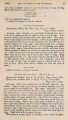
Show 476 MR. F. E. BEDDARD ON THE ATRIUM AND [May 16, throughout tbe Oligochaeta (3, p. 143). The following is a brief epitome of what he has said upon the subject: he considers that the glands described by Perrier in Perichceta, Acanthodrilus, and Bigaster are possibly the equivalents of what he (Vejdovsky) terms the " Cement-Druse " in the Tubificidae; that the glandular tube in Eudrilus which Perrier called " vesicula seminalis" is to be looked upon as the homologue of the atrium in the aquatic Oligochaeta ; so also is the gland in Pontodrilus. The next contribution to the subject is by myself ; I pointed out (4) that the genus Moniligaster-an earthworm according to the definition of most naturalists-has a terminal gland connected with the sperm-ducts which agrees in all essentials with the atrium of the aquatic genera. In a further contribution (5) I dealt with the prostates of Earthworms in general, giving reasons for regarding them as the homologues of the atria of the lower Oligochseta. Among Earthworms there are two principal forms of " prostate " met with. In Acanthodrilus, Pontodrilus, and other genera the glands are represented by long tubular bodies ; in Perichceta &c. there are a pair of lobulate bodies often occupying the same position with regard to the ends of the sperm-ducts. One question to be decided was whether these two kinds of glands were related to each other; the next question was whether these glands were homologous with any structure in the lower Oligochaeta. As to the first question, the tubular gland of Acanthodrilus was shown to differ only from the branched gland of Perichceta by the fact that the glandular cells of which it is largely composed are in the latter segregated into masses instead of forming a continuous coating. The answer to the second question is rendered easier by a consideration of the structure of the gland appended to tbe sperm-duct in Eudrilus. Perrier's account of the structure and relations of this gland were not, as I myself showed (6), quite accurate; the sperm-ducts open into the interior of the gland at about its middle. In this feature the gland of Eudrilus differs from that of Acanthodrilus, which is quite independent of the sperm-duct, or from that of Pontodrilus, where the sperm-duct only opens into the gland near to its external aperture. The identity of minute structure, however, appears to favour a comparison of the glands in Eudrilus and Pontodrilus; the only difference concerns the thick muscular coat of the gland in Eudrilus ; but I pointed out that the genus Trigaster of Benham seems to be an intermediate form in this respect. " The identity of structure," I remarked, " between tbe glandular bodies appended to the termination of the vas deferens in Eudrilus, Typhceus, &c, leads to the inference that they are homologous; while the relations of the vas deferens to this body in Eudrilus clearly favours the supposition that it corresponds to the atrium in the ' Limicolae.'" The comparison of the gland of Perichceta to the prostates of the Tubificidae seemed to m e to be rendered impossible by reason of the fact that in tbe former the cells which it was sought to compare were covered by the peritoneum, while in the Limicolae (I did not particularly mention Tubifex) and in the |