| OCR Text |
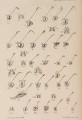
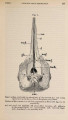
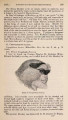
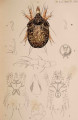
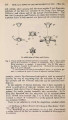
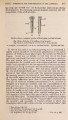
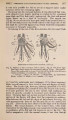
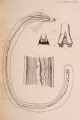
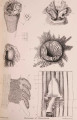
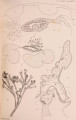
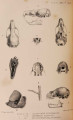
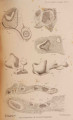
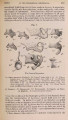
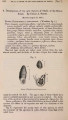
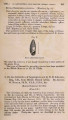
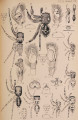
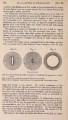
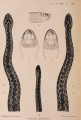
Show 266 MR. A. D. MICHAEL ON A N E W [Mar. 14, rostrum. The hinder part of the cephalothorax widens greatly, its edge being the double curve known as the line of beauty. This edge is formed by a large raised roll; the median portion of the cephalothorax is also raised, but between the two, in the hinder part of the cephalothorax, is a large, shallow depression or dimple. There are a pair of hairs close together near the anterior edge of the rostral tube. On each side there is a very long hair near the edge of the body a little in front of the first leg, a similar hair near the posterior corner of the cephalothorax, and a shorter one about midway between them, also one pair on the dorsum of the cephalothorax ; these, and all other hairs on the creature are simple and setiform. Abdomen.-The anterior edge (progaster) has a somewhat exceptional form ; the central portion (about half the width) projects boldly into the cephalothorax, is concave anteriorly, and runs out laterally so as to form a short horn or point. From the central projection the line on each side of the body runs back at an angle, but this portion also is concave anteriorly; it forms a raised roll with a large shallow depression or dimple behind it like that on the cephalothorax. When the creature is very fully fed all these depressions vanish, they also disappear after death. There are two pairs of hairs on the central projection of the progaster, the inner pair are the longer. There are also two other pairs of hairs on the notogaster (the hinder the longer), and two hairs on each lateral edge (the hinder the longer). The anus forms a short, median, posterior projecting point when seen from above, but a long slit when seen from the ventral surface; it is formed of two thin blades on edge lying close against each other, but capable of being separated widely posteriorly. Underside (figs. 2 and 3).-The sternum is a triangular plate sending out band-like projections on each side parallel to the edge of tbe rostral collar, and a similar but straight piece posteriorly in the median line; this is longer in the male than the female. The epimera of the first pair of legs are formed by the lateral projections of the sternum and a branch arising from the sternum and passing behind the legs. Those of the second pair of legs are somewhat V-shaped sclerites, which in the male are joined at their posterior ends to the posterior end of the sternum by short cross pieces. In the female they are wider apart and not attached. The epimera of the third and fourth legs are short right-angled pieces in the male. The vulva is between the two posterior pairs of legs ; but advances more forward than the insertion of the legs ; it is protected anteriorly by a large semi-annular sternite, and has well-marked chitinous labia. The male organ (fig. 9) lies rather further back ; it is protected by a slightly elliptical (almost circular) plate, slightly truncated behind. This plate covers the longish curved penis (fig. 10) and the somew7hat elaborate skeleton which supports it (fig. 9). This consists of a horseshoe-shaped sclerite with thick projecting posterior ends joined by a broad band, from a central projection of which the penis arises; the anterior end of |