| OCR Text |
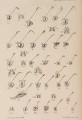
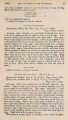
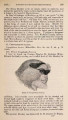
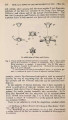
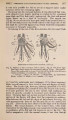
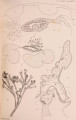
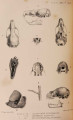
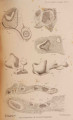
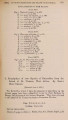
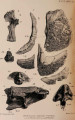
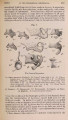
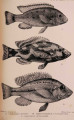
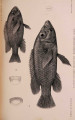
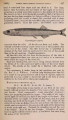
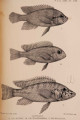
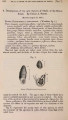
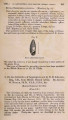
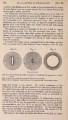
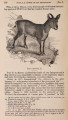
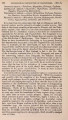
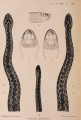
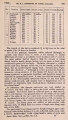
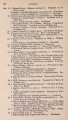
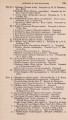
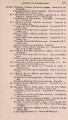
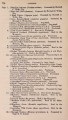
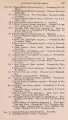
Show 1893.] FISHES FROM BRITISH CENTRAL AFRICA. 625 HEMICHROMIS MODESTUS, sp. n. (Plate LVII. fig. A.) D. jj. A. j,. L. lat. 29. L. transv. f^. All the teeth are conical, only one or two showing traces of an additional cusp, thirty-four on each side of the outer series of the upper jaw. Scales below the eye in four rather irregular series; scales on the neck and below the anterior dorsal spines much smaller than those of the body. In a specimen 6 inches long the diameter of the eye equals the width of the praeorbital and the depth of the scaly portion of the cheek, but is less than the width of the interorbital space, which is convex. The angle formed by the praeopercular limbs is a right one. Snout considerably produced, with the lower jaw strongly projecting beyond the upper, rather longer than the postorbital portion of the head. The height of the body is less than one third, the length of the head considerably more than one third of the total length (without caudal). Dorsal spines rather short, of moderate strength, the longest being one third of the length of the head. Pectoral fin reaching to the vent. Body uniform brownish black, fins black. Some of the gill-rakers are T- or hammer-shaped. A single specimen, 6 inches long, was obtained by the Rev. J. A. Williams. HEMICHROMIS LIVINGSTONII, sp. n. (Plate LVI. fig. B.) D. l0. A. 3. L. lat. 32. L. transv. ^. Teeth conical, but a few showr traces of an additional cusp, twenty-six on each side of the outer series of the upper jaw. Scales below the eye very thin, in five rather irregular series; those on the neck and anterior part of the back much smaller than those of the body. In a specimen 5 inches long the diameter of the eye is less than the depth of the scaly portion of the cheek, but equals the width of the praeorbital and of the interorbital space, which is convex. The angle formed by the praeopercular limbs is a right one. Snout moderately produced, equal to the postorbital portion of the head, the lower jaw projecting but little beyond the upper. The height of the body is a little less than the length of the head, which is nearly one third of the total (without caudal). Dorsal spines of moderate strength and length, the longest being two fifths of the length of the head. Pectoral fin reaching to the anal. Body largely and irregularly marbled with black and silvery; head ornamented' with several black bands, one from the eye to the angle of the mouth, merging into the black coloration of the lower parts, another band from the eye over the operculum, a third across the forehead, and a fourth across the foremost part of the neck; dorsal and caudal marbled with lighter and darker, ventral and anal black. None of the gill-rakers are hammer-shaped. A single specimen, 5 inches long, is in the Johnston collection. |