| OCR Text |
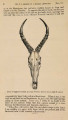
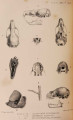
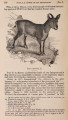
Show 1893.] MR. O. THOMAS ON NANOTRAGUS LIVINGSTONIANUS. 237 March 14, 1893. Sir W. H. FLOWER, K.C.B., LL.D., F.R.S., President, in the Chair. The Secretary read the following report on the additions to the Society's Menagerie during the month of February 1893 :- The total number of registered additions to the Society's Menagerie during the month of February was 73, of which 43 were by presentation, 6 by birth, 10 by purchase, 10 received in exchange, and 4 on deposit. The total number of departures during the same period, by death and removals, was 91. Amongst the additions attention may be called to two Terrapins procured at Okinawa Shima, or Great Loochoo Island, by Mr. P. A. Hoist, and kindly presented by that gentleman. Mr. Hoist writes that Dr. L. Doderlein has stated in a paper read before the Asiatic Society that he could find no Tortoises whatever on the Loochoo Islands. Mr. Hoist has therefore forwarded these specimens in order to show that Tortoises are certainly found there. Mr. Boulenger has kindly determined these Tortoises as being Spengler's Terrapin, Nicoria spengleri (Boul., Cat. of Chelonians, 1889, p. 120). Mr. Oldfield Thomas exhibited a specimen of what he believed to be Nanotragus livingstonianus, Kirk, which had been obtained by Mr. A. H . Neumann in Northern Zululandin April 1892. The species had only previously been known from a very imperfect scalp and skull obtained by Sir John Kirk at Shupanga on the Zambesi and described by him in the Proceedings of the Society1. Although the horns of this Zululand specimen, and also those of a second example which Mr. Neumann had generously presented to the National Collection, w7ere stouter and heavier, without being longer, than those of the type, M r . Thomas had little hesitation in referring them to the same species, the difference appearing to be merely one of age. A. livingstonianus, as evidenced by M r . Neumann's two perfect specimens, differed from its near ally, A. moschatus, Von Dub., the Zanzibar Antelope, in its decidedly larger size and thicker horns, also in the much greater extension of tbe bony palate posteriorly behind the molars, and in its much brighter and more rufous colour. In this last respect there was a considerable difference between the two, the general colour above of A. moschatus being dull fawn-grey, while in A. livingstonianus it was rich rufous verging on chestnut; the flanks and legs also were far brighter and more rufous. In the length of the ears and their coloration, and in the general distribution of the body and limb colours, there appeared to be a close agreement between the two species ; the tail of A. livingstonianus was, however, much more decidedly black above than that of N. moschatus. 1 P. Z. S. 1864, p. 657. PROC. ZOOL. Soc-1893, No. XVII. 17 |