| OCR Text |
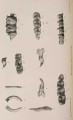
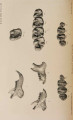
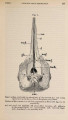
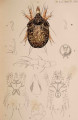
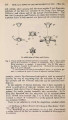
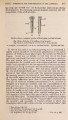
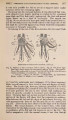
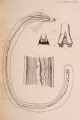
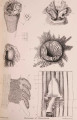
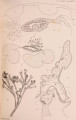
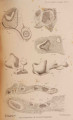
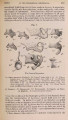
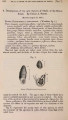
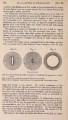
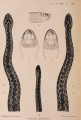
Show 274 PROF. G. B. HOWES ON THE DEVELOPMENT OF THE [Mar. 14, and more regular development of the trans-atlantal or " suboccipital " nerve in the Urodela, the facts point most markedly to the conclusion that the numerical reduction of the vertebrae of the Anura has been effected by something more than a mere shortening up from behind, as is customarily supposed \ The only alternative is a belief in a secondary origin of the occasionally transverse-process bearing half of the so-called "atlas," by subdivision of that vertebra; and, in view of Baur's recent argument2 in favour of an intercalary origin of supernumerary vertebrae, it might be asked whether the extra atlantal vertebra occasionally present in the Anura might not represent this, in a completely dismembered form. The difficulties which beset this belief are so great, and the facts, at any rate in the case before us, point so very strongly in the opposite direction, that further discussion would be futile, until w e know more than at present of the detailed nerve-relationships of such exceptional individuals as are herein dealt with. The entire question of morphology of the Amphibian " atlas " needs to be worked over afresh, in both its anatomical and developmental aspects. As the case now stands, it suggests that that structure is a compound of at least two vertebrae, whose outstanding processes have disappeared under changes which have effected the loss of the so-called " sub-occipital" nerve and the occlusion of its exits. The Urostyle.-Some months ago, while dissecting the remains of an Anuran Tadpole (? Pelobates), which I acquired from the effects of the late Prof. W . K . Parker, m y attention became arrested by the detailed relationships of a median rod-like bony centre, lying within the sheath of the developing urostyle, at a point approximate to the last two ossifying vertebrae (cf. figs. 13 and 14, cc). The accepted views of the morphology of the Amphibian urostyle are based upon tbe researches of Duges 3 and Gegenbaur4. These authors, together with Goette 5, have figured and described its leading developmental stages; and Duges, referring to the rod in question as " une epine cylindroi'de, d'abord cartilagineuse," 1 Schmidt's recent discovery (Zeitschr. f. wiss. Zool. Bd. liv. p. 748) of rudimentary arches to the caudal " pleurocentra" (Baur's " centra") of Amia appears to m e to suggest that the remarkable condition of the vertebral skeleton of that animal, and certain Elasmobranchs (cf. Goette, loc. cit. p. 418, and Balfour, Corap. E m b . vol. ii. p. 553) among living fishes, is indicative of abbreviation and simplification, by reduction of alternate vertebrae with fusion of the skeletal parts remaining, akin to but more extensive than that which I herein claim for the Anurous Amphibia. 2 Journal of Morph. vol. iv. p. 331 ; cf. also Parker, Phil. Trans, vol. 167. part 2, p. 575 footnote. 3 ' Eech. sur l'Osteoiogie et la Myologie d. Batraciens.' Paris, 1834. 4 ' Untersuchung. z. vergleichend. Anat. d. Wirbelsiiule b. Amphibien und Eeptilien.' Leipzig, 1862. • 'Die Entwickelungsgesch. d. Unke.' Leipzig, 1875. |