| OCR Text |
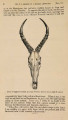
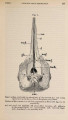
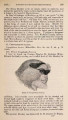
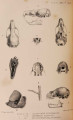
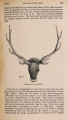
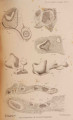
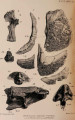
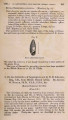
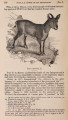
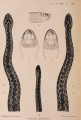
Show 444 MR. W. T. BLANFORD ON A [May 2, stated, is at once recognizable by the bright chestnut bands, which commence on each side of the forehead and are carried over the head behind the ears. I may also remark that the lower part of the back and upper surface of the tail are stained with red, which is not shown in m y original figure of this Monkey (P. Z. S. 1892, pi. xl.). 2. On a Stag, Cervus thoroldi, from Tibet, and on the Mammals of the Tibetan Plateau. By W . T. B L A N F O R D, F.R.S., V.P.Z.S. [Eeceived May 2, 1893.] (Plate XXXIV.) In the course of Captain Bower and Dr. W. G. Thorold's adventurous journey across the Tibetan plateau from west to east, two specimens of a Stag were shot by the latter at a spot about 200 miles N.E. of Lhassa1. These animals were kiUed in the snow amongst brushwood just above the forest, at an elevation of about 13,500 feet above the sea. Of one individual a complete skin, skull, and horns have been brought to England, and are now in the Natural History Museum ; of the other, the head with the skin and horns has been preserved and has been left by Dr. Thorold in London, so that I have been able to examine both. Last February I received a letter from Dr. Thorold in which he asked me to look at the specimens and let him know to what species I thought they belonged. Some time before this I had heard from Mr. Oldfield Thomas that the complete specimen had been received by the Museum but had been sent away to be stuffed. I, however, saw the head, which had been mounted, and although I did not like to come to any decided conclusion without having an opportunity of seeing the skin also, I was disposed to believe that the Deer was probably the same as that to an immature horn of which the name of Cervus nariyanus was given by Hodgson in 1851, and was clearly identical with the species of which the head was described and figured by Mr. W . L. Sclater in 1889 (J. A. S. B. lviii. pt. 2, p. 186, pi. xi.), and which was shown to be allied to the Mantchurian 0. dybowskii. For the last two months the skin has been in the hands of the taxidermists, but I have at length, by permission of Dr. Giinther, been able to examine it; and I have now no hesitation in saying that 1 believe the Stag obtained by Dr. Thorold must be regarded as an additional peculiar species of the extraordinarily specialized mammalian fauna inhabiting the Tibetan plateau. The following are the principal characters :- The animal is about the size of a Red Deer, C. elaphus. The 1 I am indebted to Captain Bower for several of the details. The approximate position is in lat. 31° 40' N., and long. 93° 30' E. |