| OCR Text |
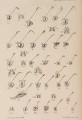
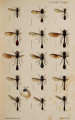
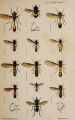
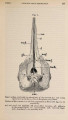
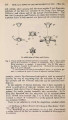
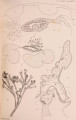
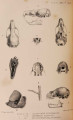
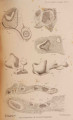
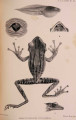
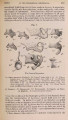
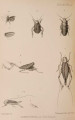
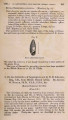
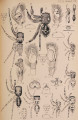
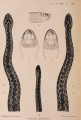
Show 1893.] ME. E. E. AUSTEN ON NEW DIFTEEOUS INSECTS. 157 the type of the species : the specimen in question is about 8 mm. in length, and resembles the female in general appearance; the face and cheeks are, however, saffron-yellow, instead of pale yellow ; the frontal triangle has a brownish median stripe extending from the antenniferous projection nearly to the angle of the eyes : the abdomen is narrower, and somewhat contracted and cylindrical at the base ; the first segment is brownish in the centre ; the third segment has a fairly broad posterior brown band, with the lateral angles only faintly indicated ; the median brown mark projecting from the anterior margin is oval in shape, and does not extend further than one-fifth the length of the segment; the wings are somewhat browner, and less yellow, but this is also the case iu the smaller of the two females mentioned above; the posterior femora have a narrow incomplete brownish band beyond the middle. This specimen is likewise from the region of the Amazons (Bates). BACCHA CEOCEA, sp. n. (Plate V. fig. 6, d •) d . Length 8* to 9 m m . Closely allied to B. crocata ; saffron-yellow ; thorax metallic, very shining, brown in the centre of the dorsum, with two narrow abbreviated yellow stripes; abdomen narrow at the base, but expanding regularly to the end of the fourth segment, with brown bands and indentations, but the third segment with no brown at the basal angles wings suffused with pale brown, alula: rudimentary; legs yellow, posterior femora with a narrow but distinct brownish baud beyond the middle, darkest on the outer side. The chief differences between this species and crocata appear in the front, thorax, and third segment of the abdomen ; the front is shining yellow, instead of dull orange (the black dot above the base of the antenna? is present) ; the thorax is very shining, and the narrow yellow stripes which are situated on either side of the median line are due to the ground-colour, and not to pollen; the metanotum is brownish, but there is no dark stripe extending backwards to it from above the middle coxa?; the first abdominal segment is brown in the centre, as is the case in the specimen which I have considered as a male of crocata, but the absence of brown from the basal angles of the third segment gives that segment quite a different appearance; there is likewise no brown in the basal angles of the fourth segment, but this, so far as its damaged condition permits m e to judge, is likewise the case in the specimen I consider to be a male of crocata; iu other respects the brown markings of tbe abdomen are almost precisely similar to those seen in crocata; the median brown stripe on the fourth segment stops short of the anterior margin in the typical specimen, but reaches it in the other example in the collection; the wings are less infuscated than in the supposed male of crocata, and are somewhat narrower and longer; the third longitudinal vein is straighter, and the terminal portion of the fourth vein, closing the first posterior cell, less sinuate. Brazil, region of the Amazons (Bates) : two specimens. |