| OCR Text |
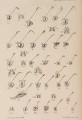
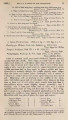
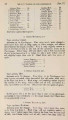
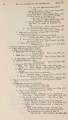
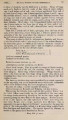
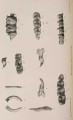
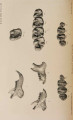
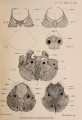
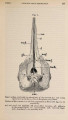
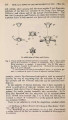
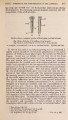
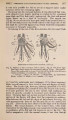
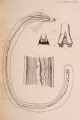
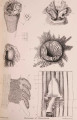
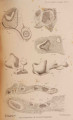
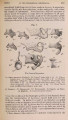
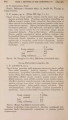
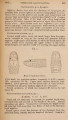
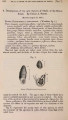
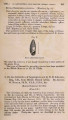
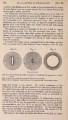
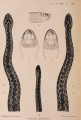
Show 510 MESSRS. BEDDARD AND PARSONS ON [June 6, little difference; here the first two rings of the bronchus are equi-sized; this at any rate applies to the two species Conurus aureus and Conurus cruentatus, which are the only two that we have examined from this point of view. The genus Ara (species Ara leari (fig. 6), Ara miliiaris) agrees with Conurus. Psittacus (fig. 8) is like these genera; but Pionus (fig. 9) agrees more closely with Chrysotis. It will be obvious from what we have said and from the illustrations of the syrinx which accompany this paper that no hard-and- fast line can really be drawn between the two groups into which we divide the Parrots ; if it were thought desirable to draw such a line it would be between the genus Cacatua on the one hand and all the remaining Parrots on the other. Cacatua alone has a syrinx in which the first bronchial semirings are incomplete leaving a bare tract laterally which is easily visible when the syrinx is viewed from the side: but in this genus there is another peculiarity which we have not yet referred to-the intrinsic muscle of the syrinx (fig. 5, m) ends in a very narrow point which passes into a fine tendon of attachment; in Chrysotis, Eos (tig. 2, m), &c, the muscle is comparatively broad down to its actual attachment. In this particular Microglossa and Stringops agree with Cacatua, although they do not show the incomplete rings that have been mentioned as characteristic of the latter genus. These genera in fact are to this extent intermediate between Cacatua and the more normal (at any rate more usual) form of syrinx in the Parrots; the rings are still, however, soft and cartilaginous, thus different from Conurus, which is a further step in the direction of Chrysotis; Chrysotis seems to represent the opposite extreme to Cacatua. Ara is a genus which is also intermediate in the characters of its syrinx, it has weakish and straight rings, as in Stringops for instance ; but the muscles are as in the second group of Parrots, and the general aspect of the syrinx is more in accord with this placing of it. § Myology. W e find that the Parrots are very much alike in their myology; there are, however, a few points in which they show differences and which may be useful for the purposes of classification. In the first place, the arrangement of the tendons of the tensor patagii varies considerably. Speaking generally (see Fiirbringer, Morph. v. Syst. d. Vogel, Taf. xxii. figs. 4, 5, 6 : Sittace, Psittacus, Cacatua) this muscle ends in a broad aponeurosis which lies between the two layers of skin of the patagium, and in this aponeurosis are three thickened bands which run down to the forearm to join the tendon of the extensor longus at right angles; from the lower margin of this transverse tendon another slip runs down to the ulna, having the same course as the patagial tendons, but not being necessarily in the same line with any of them. The anterior patagial tendon usually curves forwards near its lower attachment and the posterior slightly backwards; in addition to this the |