| OCR Text |
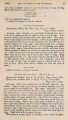
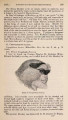
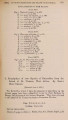
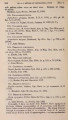
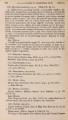
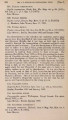
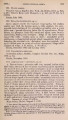
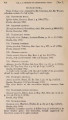
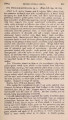
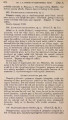
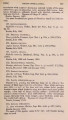
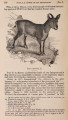
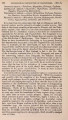
Show 1893.] MR. p. L. SCLATER O N CERCOPITHECUS ALBIGULARIS. 691 November 21, 1893. Sir W. H. FLOWER, K.C.B., LL.D., F.R.S., President, in the Chair. The Secretary read the following report on the additions Society's Menagerie during the month of October :- The registered additions to the Society's Menagerie during the month of October were 121, of which 57 were by presentation, 27 by purchase, 3 by birth, and 34 were received on deposit. The number of departures during the same period, by death and removals, was 106. The most noticeable additions during the month were:- 1. An example of the Goliath Beetle (Goliathus druryi), one of the largest of known Coleoptera, obtained near Accra, Gold Coast, and presented Oct. 5th by F. W . Marshall, Esq. 2. An adult female and a young of the Manatee (Manatus americanus), captured in Manatee Bay, Jamaica, and most kindly sent home for the Society's Collection by Sir Henry A. Blake, K.C.M.G. Unfortunately they reached the Gardens in a very exhausted condition, and died soon after their arrival. Mr. Sclater exhibited a mounted specimen of an African Monkey (Cercopithecus albigularis) from the Leyden Museum, and made the following remarks :- Dr. Jentink has kindly sent to me from the Leyden Museum for comparison a West-African example of Cercopithecus albigularis, which I now exhibit. It was obtained by Pel on the Gold Coast, and therefore there can be no doubt as to its locality In my paper on the Monkeys of this genus, P. Z. S. 1893, p. 251, I commented upon the strange fact that this Monkey, which we commonly receive from Mozambique and various ports iu East Africa, should also occur in West Africa, and suggested that specimens from the two countries should be compared. I have placed the present specimen side by side with the original type of Sykes (described P. Z. S. 1831, p. 106), now in the British Museum, and must admit that I can find no grounds for specific distinction. Sykes's specimen was originally living in the Society's Gardens, and its locality (given by Sykes as Madagascar) is absolutely uncertain ; but of two East-African specimens obtained on the Rufiji River opposite Zanzibar, 8° S. lat., by Capt. Wharton, R.N., F.R.S., and now in the British Museum, one agrees very well with the present specimen, though, as a general rule, East-African specimens (of which we have two now living in the Gardens) have a strong rufous tinge round the anus under the tail, which is not apparent in the present example. On the whole, however, I am not at present prepared to say that East and West African specimens of this Monkey can be properly distinguished. |