| OCR Text |
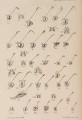
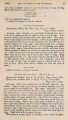
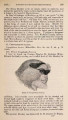
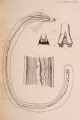
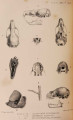
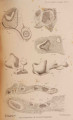
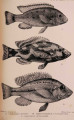
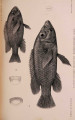
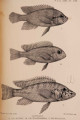
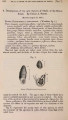
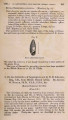
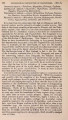
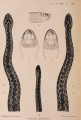
Show 1893.] FISHES FROM BRITISH CENTRAL AFRICA. 621 about its identity with a well-preserved example in the Nyasa collection. CHROMIS SQUAMIPINNIS. (Plate LIII. ad. et jr.) Chromis squamipinnis, Giinth. P. Z. S. 1864, p. 311. D. U)_u. A. g. L. lat. 33. L. transv. ^- Teeth very small, notched, brown at the tip, with the inner cusp longest; in young specimens about thirty-four, in old ones about forty on each side of the outer series of the upper jaw. Scales below the eye in two series ; those of the body smooth and not ciliated. Forehead broad, flatfish, its width being much more than the diameter of the eye. In old specimens the horizontal width of the prajorbital equals the diameter of the eye, but is much less in young ones. The scaly part of the cheek is narrow, much narrower than the orbit. The two limbs of the praeoperculum meet at a right angle. The height of the bjdy is two fifths of the total length without caudal, the length of the head one third. The length of the longest dorsal spine equal to that of the postorbital portion of the head. Pectoral fin long, somerlmes extending beyond the middle of the anal. Caudal densely covered with minute scales, which are visible even in young specimens. Greenish, shining silvery, with six or seven irregular black cross-bands, tbe foremost in the middle of the neck, the last on the free portion of the tail; the band below the origin of the soft dorsal is frequently continued into a spot on that fin. This species seems to be the most common. I first described it from skins collected by Sir John Kirk, of which the largest was 12 inches long ; Mr. Whyte now sends some specimens from 3 to 4 inches long. The figure of the adult specimen is reduced to § the natural size. CHROMIS SUBOCULARIS. (Plate LIV. fig. B.) D. JQ. A. g. L. lat. 30. L. transv. j|. Teeth deeply bicuspid, with the inner cusp longest; brown at the tip in a specimen 4 | inches long ; twenty-three on each side of the outer series of the upper jaw. Scales below the eye in three series. The diameter of the eye exceeds the width of the praeorbital and the width of the interorbital space, which is flat, but is nearly equal to the depth of the scaly portion of the cheek. The two limbs of the prasoperculum meet at nearly a right angle. The height of the body is nearly equal to the length of the head and one third of the total without caudal; the longest dorsal spine is the last, and less than one half of the length of the head. Pectoral fin extending to the origin of the anal. Scales smooth. Body with seven blackish cross-bands, which are rather irregular and do not descend to the lower half of tbe body; the first is in front of the dorsal and the last two on the caudal peduncle ; a short black |