| OCR Text |
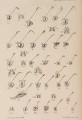
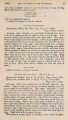
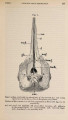
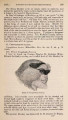
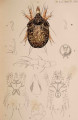
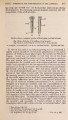
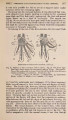
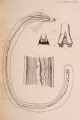
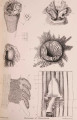
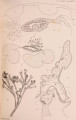
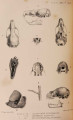
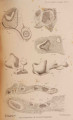
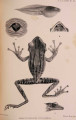
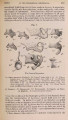
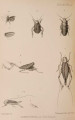
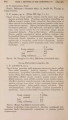
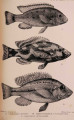
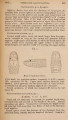
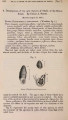
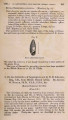
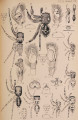
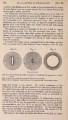
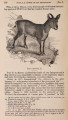
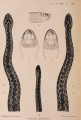
Show 320 MR. M. F. WOODWARD ON T H E [Mar. 28, numbering 11/12 and 13/14 ; in five specimens additional glands were present on 11/12 only ; in four on 13/14 only; while in one example additional glands were present on 13/14, 14/15, 15/16th l. These accessory genital glands were rendered easily visible on dissecting the specimens under spirit, but their real nature could only be made out either by means of sections examined microscopically or, more roughly, by isolating the gland and clarifying it entire. One specimen was of such exceptional interest that a detailed description is necessary. This was a large sexually adult A. longa, possessing well-developed testes on mesenteries 9/10, 10/11, and ovaries on mesentery 12/13. In addition to these glands there were present, on mesenteries 11/12 and 13/14, accessory organs having all the microscopic structure and detailed relationships of true genital glands. The anterior and larger pair of these bodies corresponded in position to the anterior pair of additional ovaries described in m y former paper 2, but they differed very much from these both in appearance and shape, being a flattened fan-shaped structure with a slightly branched extremity, resembling the normal testes rather than ovaries (Plate X X I V . fig. 2). The additional gland of the right side when removed from the body, stained and clarified entire (fig. 2 a), was seen to present the following appearance :-Its main mass was composed of a great number of closely-packed, small, rounded cells, imbedded in a slight amount of connective tissue. The cells situated near the base of the gland were slightly larger and more uniformly diffused than those nearer the middle and free end, which latter showed a marked tendency to be aggregated into masses, roughly resembling the acini of a typical gland. The nuclei of the cells, when seen under a high magnification, present a very characteristic appearance, owing to the arrangement of the chromatin round their periphery. Tnis is a stage in nuclear division which immediately precedes the formation of the nuclear spindle. The presence of all (or nearly all) the cells in this stage of division indicates that nuclear division is here extremely rapid and takes place in most of the cells at the same time; the resting-stage appears to be slurred over, the nuclei emerging from one division and passing straight into the early stages of the next without any marked pause. If we compare the siructure of this body with that of the testes (Plate X X L V. fig. 3), we notice at once the very strong resemblance, in the aggregation of the cells into masses, in the prevalence of this particular division stage iu the nuclei, and in tbe larger size of the cells at the base as compared with those at the free end of the gland. The only observable differences between the testis and this 1 Three of the nine specimens possessed of additional genital glands on the 11/12 mesentery had testes developed in this situation, while the remaining six had ovaries. 2 P.Z. S. 1892, p. 184, pi. xiii., ov\ |