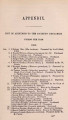
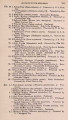
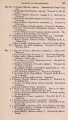
| OCR Text |
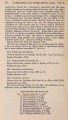
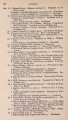
Show 744 MR. C. J. GAHAN ON COLEOPTERA [Dec. 5 Following his description of Anubis dissitus (Cist. Ent. ii. p. 412) Bates remarks that * A. clavicornis ^v= sexmaculatus, White), dissitus and scalaris, Pasc, ar_. distinguish!^ f r o m e a ch other bv the form of the pygidium. In clavicornis it is sn^ted 0r notched at the apex, in scalaris abruptly narrowed and subacute,-^ rlissitus rounded." This statement coming from so eminent and car<^ an authority is likely to create confusion. In but a single specimen of clavicornis out of several that I have examined (including the Fabrician type) did I find the pygidium to be sinuate, and in that one it was only slightly so ; in all the others it was rounded. In sccdaris, Pasc, also, the pygidium is rounded. Bates probably mistook for the latter an undescribed species (A. bohemanni, White MS.) in which the pygidium is rather sharply pointed and slightly curved outwards at the apex. In this species also the fifth ventral segment is rather strongly emarginate behind. In markings it resembles A. scalaris, Pasc. 41. LOPHOPTERA ASPERULA, White. 42. TRAGOCEPHALA YARIEGATA, Bertol. 43. CEROPLESIS CAFFER, Thunb. 44. CYMATURA BIFASCIATA, Gerst., var. NIGRIPENNIS. Elytris omnino nigris. This variety is only to be distinguished from the form described and figured by Gerstaecker by its wanting the two ochreous transverse bands of the elytra which are present in that form. The elytra and the pubescence that covers them are entirely black. 45. NITOCRIS SIMILIS, sp. n. 2- N. abdoininali (Fahr.) supra sat similis sed pauilo major; metaihorace utrinque nigro-plagiato; abdomine nigro, subtiliter atro-pubescence, segmentis 1°, 2°que utrinque triangulariter fulvo-sericeo-plagiatis, segmento 4° transversim fulvo-sericeo-fasciato ; segmento ultimo medio late subdepresso et dense nigro-tomentoso ; pedibus flavo-testaceis, tarsis omnibus supra et tibiis posticis nigris. Long. 23-28 mm. This species closely enough resembles N. abdominalis when seen from above, but may be distinguished by the characters of the underside. There is a black transverse or oblique patch, of greater or less extent, on each side of the hind part of the metathorax ; the first abdominal segment has a large triangular fulvous sericeous spot on each side, the anterior and posterior margins of the segment being also narrowly fulvous ; the second has also a triangular fulvous spot on each side (in some examples a very small fulvous spot appears at the postero-lateral angle of the third segment); the fourth has a narrower transverse spot on each side, the two spots of this segment forming together a transverse band slightly interrupted in the middle; the last segment is somewhat broadly depressed in the middle of its ventral surface, |