| OCR Text |
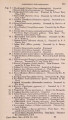
Show 1893.] ODONTASTER A N D THE ALLIED GENERA. 261 3. ODONTASTER ELONGATUS. Gnathaster elongatus, Sladen, Chall. Rep. Ast. (1889) p. 288. 4. ODONTASTER GRANULOSUS. Asteroclon granulosus, Perrier, Miss. Cap Horn (1890), p. K. 132. But for its pedicellariae this species is very close to 0. singu-laris. 5. ODONTASTER GRAYI. Calliderma grayi, Bell, P. Z. S. 1881, p. 95. Pentagonaster paxillosus, id. (not Gray) t. c. p. 95. Gnathaster gragi, Sladen, Chall. Rep. Ast. (1889) p. 750. Asterodon pedicellaris (pars), Perrier, Echinod. Miss. Cap Horn (1891), p. K. 135. Asterodon gragi, id. t. c. p. K . 138. After a very careful and detailed examination of the descriptions and the specimens at m y disposal, I have come to the conclusion that:- (1) What in 1881 I called the young of Pentagonaster paxillosus, Gray, is not so, for P. paxillosus has two long (? glassy) spines at each oral angle, while the Magellan specimen has but one. (2) P. paxillosus, Bell (1881), is clearly the same as those specimens of Asterodon pedicellaris which have not the remarkable " pedicellariae" said by M . Perrier to be found in some members of that species, with regard to which I should be glad of more detailed examination; aud I give, therefore, the synonymy as above. (3) M . Perrier's account of his example of " Calliderma grayi," which is larger than the two small specimens in the British Museum, is sufficient to assure m e that we have here to do with one species under three specific and three generic names ! (4) A comparison of the original of Mr. Edgar Smith's Pentagonaster meridionalis with M . Perrier's descriptions shows that there is no reason whatever for regarding it as synonymous with A. pedicellaris. The last-named species appears to m e to be divisible into two; so far as I can form a mental picture of the " pedicellariae " described by Prof. Perrier, their presence or absence is a point of sufficient importance to justify specific distinction. With regard to 0. meridionalis, Mr. Smith is not affected by the complaint of M . Perrier that he " ne signale pas " the remarkable pedicellariae, for they are not present on the specimen which formed the basis of his description. On the other hand, Mr. Sladen is quite correct in pointing out that there ai*e no pedicellariae on the upper surface of the same specimen. 6. ODONTASTER HISPIDUS. Odontaster hispidus, Verrill, A m . J. Sci. xx. (1880) p. 402." 7. ODONTASTER MERIDIONALIS. Astrogonium meridionale, E. A. Smith, Ann. & Mag. Nat. Hist. xvii. (1876) p. 109. |