| OCR Text |
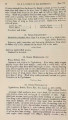
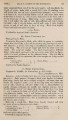
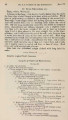
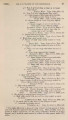
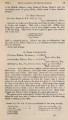
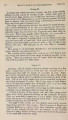
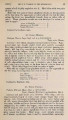
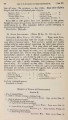
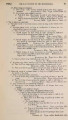
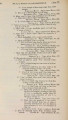
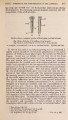
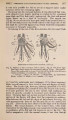
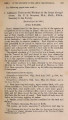
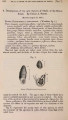
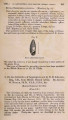
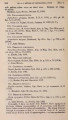
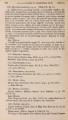
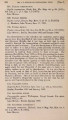
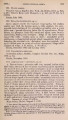
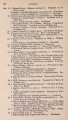
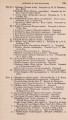
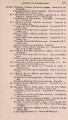
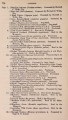
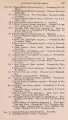
Show 1893.] ME. E. Y. WATSON ON THE HESPEEIID.E. 97 costa; vein 12 reaching costa before the end of cell; upper discocellular short but distinct, almost at right angles with upper margin of cell; middle discocellular long, inwardly oblique, lower discocellular short, lower margin of cell bent abruptly upwards at vein 3, the portion between veins 3 and 4 being in the same straight line as the lower discocellular; vein 2 close to 3, many times further from base of wing than from vein 3. Hind wing very narrow, the abdomen extending far beyond the anal angle ; outer margin even ; vein 7 shortly before the end of cell ; discocellulars and veiu 5 faint; vein 3 shortly before the end of cell, twice as far from 2 as from 4; vein 2 almost equidistant from end of cell and base of wings. Hind tibiae with two pairs of spurs. menes, Cram 1. yracilis, Feld. ... 2. Confined to tropical South America. 5. Genus ANCYLOXYPHA. Ancyloxypha, Felder, Verh. zool.-hot.^Gesellsch. Wien, xii. p. 477 (1862). Type, numitor, Fabr. Antennae very short; club moderate, straight, bluntly pointed. Palpi as in Adopcea. Fore wing not apically produced, costa and outer margin convex, inner margin longer than outer margin; cell less than two-thirds the length of costa; vein 12 very short, reaching costa before the centre; middle discocellular considerably longer than lower ; vein 5 considerably nearer to 4 than to 6 ; lower margin of cell bent sharply upwards at vein 3, the portion between veins 3 and 4 lying in the same straight line as the lower discocellular ; vein 3 consequently from lower angle of cell, about twice as far from 2 as from 4 ; vein 2 many times further from base of wing than from vein 3. Hind wing, outer margin even. Hind wing: vein 7 immediately before the end of cell; discocellulars sharply angled, the middle one being erect and the lower outwardly oblique; vein 5 not traceable ; vein 3 shortly before the end of cell, nearer to 4 than to 2 ; vein 2 slightly nearer to end of cell than to base of wings. Hind tibiae with two pairs of spurs. No sexual characters on wings. f numitor, Fabr. X puer, Hiibn. Habitat. North America. The Asiatic species " Cyclopides " subvittaius, Moore, also appears to belong either to this genus or to one closely allied to it, but the only specimens I have been able to examine have been without antennas and palpi; at any rate it does not belong to Cyclopides, from which the neuration at once separates it. 6. Genus COP^EODES. Copeeodes, Speyer, Stett. ent. Zeit. 1878, p. 183. Type, procris, Felder. Antenna? very short; club robust, straight, apex rounded. Palpi P E O C . Z O O L . Soc-1893, N o . VII. 7 |