| OCR Text |
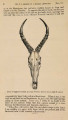
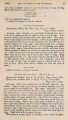
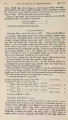
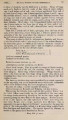
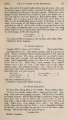
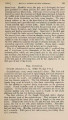
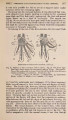
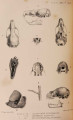
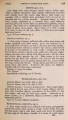
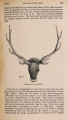
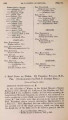
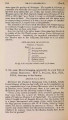
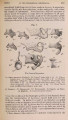
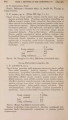
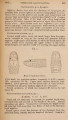
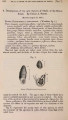
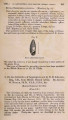
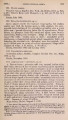
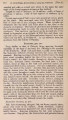
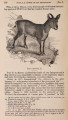
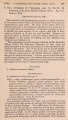
Show 1893.] MONKEYS OF THE GENUS CERCOPITHECUS. 255 The Diana Monkey is by no means scarce iu captivity, and during the past thirty years we have had at least 25 specimens of it living in the Society's Monkey-house. In Gray's Catalogue of Monkeys (p. 22) a " var. ignita " of this species is constituted, as having " the back edge and inner side of the thighs bright red-bay." On M a y 31st, 1889, we received, as a present, from Col. Wethered of Great Marlow, a female Monkey of this form, of which I now exhibit the skin. Besides the difference above referred to, it will be observed that the white frontal band is not so well marked in this specimen, and that the black of the chin is carried down over the upper part of the beard, which is shorter than in C. diana typicus. I propose to designate this subspecies C. diana ignitus. Col. Wethered kindly informs me that the specimen in question was brought from the Congo by Capt. Moore-Harper in 1886, so that C. diana ignitus is probably a southern form of C. d. typicus. 31. CERCOPITHECUS BRAZZA. Cercopithecus brazzce, Milne-Edw. Rev. Sc. ser. 3, xii. p. 15 (1886). Hab. French Congoland (Brazza), I have to thank our Foreign Member M . Alphonse Milne- Edwards for kindly sending m e a stuffed head of this Monkey for Head of Cercopithecus brazzce. exhibition. It is certainly most remarkable for its elevated red frontal band, which is composed of short erect hairs. This is bordered behind by a broad black band, which extends to the ears on both sides, and in front by a narrow black stripe over each eye. The upper portion of the nose is black, the lower portion, together with the cheeks and lips, is covered with short white hairs. The beard on the chin and throat is long and abundant, formed of white hairs. This peculiar Monkey was discovered by M . Jacques de Brazza, |