| OCR Text |
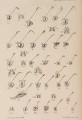
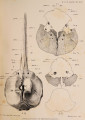
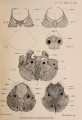
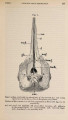
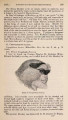
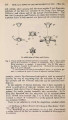
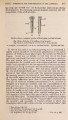
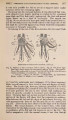
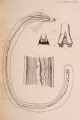
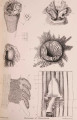
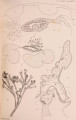
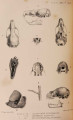
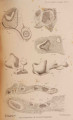
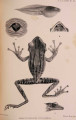
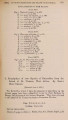
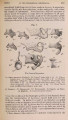
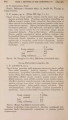
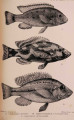
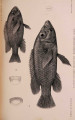
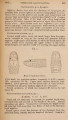
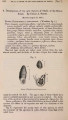
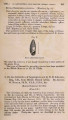
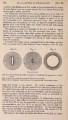
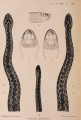
Show 272 PROF. G. B. HOWES ON THE DEVELOPMENT OF THE [Mar. 14, it are alluded to in Cope's recent ' Batrachia of North America'*, except that he refers to the odontoid process of the Urodela (p. 29) as the " body of the pro-atlas ;" Adolphi is silent on the topic, assuming the " sub-occipital" nerve to be absent in all Anura2; while Fiirbringer, in a laborious investigation into the comparative anatomy of the shoulder-muscles, has recorded 3 his inability to find a nerve either passing between the skull and the first vertebra or perforating the arch of the latter, in any Anuran which he dissected (Pipa excepted). Not the least interesting feature in the transverse-process bearing " atlas " of Rana catesbiana (fig. 5 b) and R. esculenta (fig. 4 b) is the presence on the under surface of each of a couple of eminences, well-nigh indistinguishable from those present in the specimen herein described (fig. 1 a) at the point of fusion of the 8th aud 9th vertebrae (x). Rana macrodon reveals no such peculiarity (fig. 3), but in the Axolotl, in which also I find a " suboccipital " nerve may be present, a deep lyriform depression occurs at the corresponding point (x, fig. 6), bounded in front by a median tuberosity. While, on exclusively anatomical grounds, these points of similarity support the principle of Hyrtl's conclusion, the facts of comparative morphology 4 that have in recent years shown the hypoglossus nerve-bearing region to be incorporated in the occiput of the Amniota, together with those which are rendering it more and more clear that the os odontoideum of these animals is a true centrum, and the so-called " body" of their atlas an intercentrum 5, forbid further comparison between the " atlas " of the Amphibia and either the atlas or epistropheus of the higher Vertebrata. The nerve passing through the arch of the " atlas" in some Urodela conforms, so far as is known, to the characters of a true spinal nerve ; as described by Humphry in Megalobatrachus, it has the relations rather of a ventral than a dorsal ramus of a typical nerve of the trunk; while, as described by Fischer for Menobranchus, the reverse would appear to hold good. Prof. Stewart informs me that in Rana catesbiana (the " atlas " of which is herein figured) he traced it to the muscles of the hyoid region. Stohr has recently shown 6 that the odontoid process of the Amphibian (Triton) is a primarily independent derivative of the cranial notochord ; and he lays much stress 7 upon the conclusion that the homologues of the hypoglossus and accessorius nerves of the higher Vertebrata are to be sought in the anterior spinal nerves of the lower ones. If this be accepted, the known 1 Bull. U.S. Nat. Mus. no. 34 (1889). 2 Loc. cit. p. 316. 3 Jenaische Zeitschr. Bd. vii. p. 286 (1873), and Bd. viii. p. 180 (cf. v. Ihering, infra, p. 273). 4 For a, resume of these see P. Z. S. 1890, p. 358. 5 Cf. especially Baur, Biolcg. Centralbl. Bd. vi. p. 359, and Boulenger, Ann. & Mag. Nat. Hist. ser. 6, vol. iii. p. 140. 6 Zeitschr. f, wiss. Zool. Bd. xxxvi. p. 99. 7 Ibid. Bd. xxxiii. p. 518. |