| OCR Text |
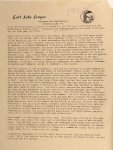
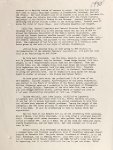
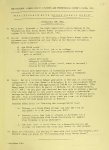
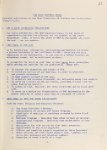
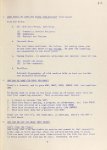
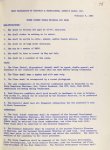
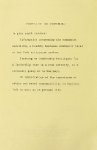
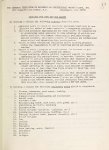
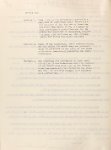
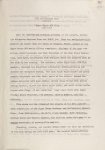
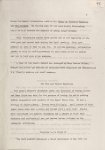
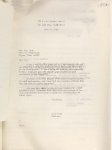
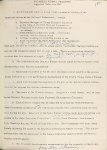
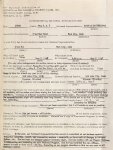
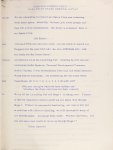
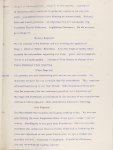
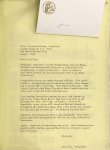
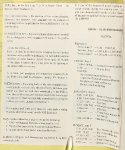
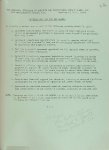
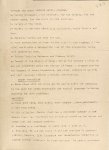
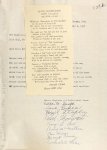
Show I 15 When one stops to think about it I it is an amazing fact that less than one hundred years ago there were almost no accepted rules of parliamentary behavior, and practices varied widely in all parts of the United States. In almost every meeting held, lock of uniformity and agreement led to endless confusion and misunderstanding, making effective action difficuft. N\aior Henry Martyn Robert's little book, R-obatt's Rules of Order, was published in parliamentary practice throughout the United States. Today Robert's Rules of CA-der Revised enjoys the reputation of being the standard guide to parliamentary procedure; indespensable to members of government bodies, organtza Hons, and groups throughout the country. 1 B74 and did so much to form and transform Common law under the old English [odlclc] system was the unwritten law of the country based on custom, usage, and [udlclo l decisions. So common parliamentary laws are those established rules and customs which are entirely elementary but which everyone should know. Common Pari iamentary Law 1. On Iy one question can be considered If must be in the form of a propo sition or motion, to be proposed or moved by one member and seconded by another I and must then be stated by the presiding officer, after which it is open to debate and amendment. at a time. 2. No one can make a motion or speak in debate unt i I he has risen and addressed the presiding officer by h is proper title and has been "recognized by him", and thus has "obta ined" the floor. (over ten minutes in an ordinary society), than twice on the same No one in speaking can address his re marks to another member or use another member's name when it can be avoided, but his remarks must be addressed to the presiding officer. 5. 6. When a question is once before the assembly, it must be adopted or rejected by a vote I or be disposed of in some other way I before any other subject con be introduced except certcin ones entitled to this privilege and which are, therefore, called "privileged motions" 3. No one can speak unreasonably long or more 4. No member can speak a second time on the same question provided anyone desires to speak who has not spoken on that question. question on • the same day, without permission of the assembly. Just as in engineering or surveying, there is a datum or reference point from which all else is measured; in parliamentary procedure, the datum point is the "Wlll OF THE ASSEMBLY". The only valid reason for holding a meeting is to get at the will of the assembly, and all rules should contribute to the accomplishment of that end. Other principles are that the maiority must rule, the must be heard, the rights of individua Is must be guarded, and [usrlce minority must prevail. Parliamentary low outlines the order of procedure in which all motions may be handled in their proper order. It provldes for the regulation of discussion and the preservation of voting rights. In it short, systematizes and codifies rules of conduct so that a II organizations may function efficiently, and I - harmoniously fairly RHEU,v\A TIC FEVER-HEART 'FUND H. M. Iv\arvin, M.D life is to spend it on Do rothy Bradshaw has written, "Wi lliam James once said, 'The great use of a In spending it thus, we can fill it with with with precious memories; we can iustify the qualities that make us human beings; we can, In truth, edd glocy to our dust'. " jO1 dignity.' " something that outlasts it' ..• I |