| OCR Text |
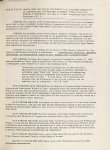
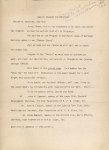
Show CONGRESSIONAL RECORD 21798 the construction business, and thus might actually have rented three buildings within a year, will be deemed under the language of this bill to be in the business of building, developing, selling, renting, or leasing dwellings. Senators can multiply examples as they choose; I am sure the idea has been made clear by the examples I have given. Most of the penal restrictions on prop erty owners are contained in section 403, and this section has a subsection which says it shall not apply to any property owner with respect to the sale, lease, or rental by him of a portion of a building or structure which contains living quar ters occupied or intended to be occupied by no more than four families living independently of each other, if the owner himself actually occupies one of these living quarters as his residence. RIGHTS OF ALL SHOULD BE PROTECTED Of course, if the right of private prop erty is to be protected, then it must be protected for all men, whether or not they own one-family or four-family dwellings, and whether or not they live in such dwellings. But quite aside from that point, the exemptions provided in the subsection I just referred to do not really amount to as much as one might think. In the case of a roominghouse, if there are more than three roomers, the ex emption would not apply, because each separate room rented would count as one in totaling up the number of living quarters in the building. In the case of a man who moves out of his home into an apartment, or into a hospital, or a sanitarium, or a home for the aged, and seeks to rent the now-vacant dwell ing, the exemption would not apply. Statistics are not available on just how many homeowners would benefit by the exemption contained in the subpara graph to which I referred. But certainly the number of homeowners not exempted by this subsection is far greater. Not only does title IV seek to inter fere unjustifiably and unconstitutionally with the right of private property; it goes further and provides for enforce ment of this interference through a blanket authorization of civil actions in Federal district courts which cannot fail to bring with it, if this bill is enacted, the worst court congestion this country has ever seen. LAWSUITS WOULD MULTIPLY Lawsuits are authorzed to be brought in Federal court without regard to the amount in controversy. Actions to en force involuntary sales are authorized to be brought by private individuals, on their own election, without meeting any standards of proof, and without the payment of any fees or costs or the post ing of any security to provide compen sation if the action is found to be with out merit. While it is true that the authority to bring these actions without the payment of fees or costs depends upon court ap proval of an application, there is no re quirement for any showing of fact, with respect to the merits of the case, when the application is filed. One of the bases upon which I would think a court would act favorably on such an application - would be an affidavit of inability to pay. Court appointment of an attorney, also authorized by this bill, would free the instigator of the suit entirely and for ever from the payment of any attorney's The action would cost him noth fees. ing. But, of course, to defend the ac tion, the homeowner would have to bear the entire cost in trouble and in money. How many actions do you think would be brought in your State, in your county, in your own hometown, if this bill be comes law and legal actions of this par ticularly vicious and harassing and vengeful type are made possible without any financial detriment, or even finan cial risk, to the plaintiff? Whatever the estimate you make, it is likely to prove too low. NO GENUINE In the face of such plain constitutional language and such unequivocal inter pretations by the courts, the proponents have strained mightly to have housing discrimination by a private citizen relate back to some action by the States. One sentence from their so-called constitu tional memorandum illustrates their argument: Perhaps the principal impetus to housing discrimination * * * was legal recognition and judicial enforcement restrictive covenant. CONSTITUTIONAL BASIS Neither can the 14th amendment oper ate as a constitutional basis unless we are to ignore or repudiate its explicit language. That language reads in part: or enforce any law privileges or immu nities of citizens of the United States; nor shall any State deprive any person of life, liberty or property without due process of law., nor deny to any person within its juris diction the equal protection of the laws. In times past, the courts have uni formly held that the proscriptions of the 14th amendment apply to State actions only and not to actions by private citi Even the decision in Shelley zens. against Kraemer, on which the propo nents of this legislation rely most strongly, clearly states: That amendment erects no shield against merely private conduct, however discrimi natory or wrongful. of the raciany Prior to the Supreme Court's decision in Shelley against Kraemer in 1948, State courts recognized the validity of such covenants in real estate deeds. This, the proponents argue, constituted State ac tion. Such action promoted the pattern of residential segregation which became established prior to 1948. These pat terns, the argument continues, encour aged private citizens to discriminate in private sales, and this private discriml, nation had continued down to the pres ent. Therefore, they say, when a private citizen discriminates in the sale of his private home today, it is because of State action 20 years ago, and accordingly the 14th amendment should be invoked. During my short life I have owned three homes. The deed to none of them contained a restrictive clause. If the rationale is made that because restric tive clauses existed with the color of law 20 years ago, certainly they did not apply to the homes I have owned over this The proponents of H.R. 14765, state that title IV, the open housing title, is bottomed on the commerce clause and the 14th amendment. It is said that be cause building materials and home fur nishings move across State lines, because people move their residence from one State to another, because mortgage money is borrowed outside the State, and because disputes and disturbances inter rupt the interstate movement of persons and things, the business of buying and selling private dwellings is therefore in terstate commerce and subject to regu lation by the Federal Government, in spite of the fact that these dwellings are firmly fixed to a particular piece of land in a particular State. If this is so, then interstate commerce means something more than the courts have interpreted it to mean. Heretofore, the courts have said that interstate commerce ends when goods come to rest in the State of desti nation. While it is true that the Supreme Court in the recent case of Atlanta Motel against United States diluted that rule when it upheld the public accommoda tions title of the 1964 Civil Rights Act, it did so only with reference to commercial establishments which were using inter state goods for profitmaking resale. Here, we are talking about private dwell ings where interstate goods have left the channels of commerce and have changed their status from personalty to realty. Only by the most devious and artful ra tionale can the interstate commerce clause be urged as a proper constitutional connecting link. No State shall make which shall abridge the September' 15, 1966 SENATE period. Another sentence from the memoran dum is revealing: A further reason for congressional inter vention is that housing discrimination * • • is maintained today, not by a series of inde pendent individual decisions, but by per vasive customs, practices, and attitudes that In these have the practical force of law. circumstances, the coercive effect of the cus tom may be treated as constitutionally equiv alent to official action. As I read that statement, it says there' is no reason for a Congress, there is no need for State legislatures; all we have ' to do to create law in this country is to a group of people in a particular community seem to be acting the same way, seem to be taking the same point have . I I of view on a particular problem, and the fact that they seem to be taking the same view, without any demonstration that there was an actual agreement among them, creates the situation, to use the words again, "constitutionally equivalent to official action." I • ; I cannot think of any way in which an idea can be strained and distorted Ii more effectively. To paraphrase that sentence would be , to say that the customs, practices, and attitudes of private citizens are the same II thing as State action, and therefore, whenever a private citizen discriminates II in the sale of his home, the 14th amend- , ment against State action justifies con action against the private cit- gressional : Such a threadbare thesis, I sbmit, indicts the very proposinon it I? I tends to justify. It is its own best WIt- It ex ness to the poverty of its logic. Izen. ' poses the frustrations of those who have searched the Constitution vainly for the authority they want to change the prop- I |