| OCR Text |
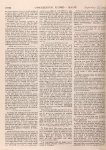
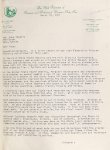
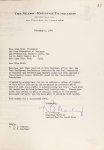
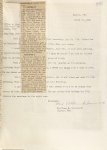
Show CONGRESSIONAL RECORD lrseptember 15, 1966 - SENATE 21799 that the house to another city, he has got to sell his laws whic this Natic)ll has honored )rty and half from home, he advertises it, and-this is al ince its foundmg. was I Not only is there n?thig to. be found to JustIfy this change, the IsConstitution much to be found which f ere \gainst y a reasons ard As Mr. Justice Douglas, conservative extremist, has said: it. to the States The Bill of Rights, as applied clause of th 14th through the due process \,;endment, casts its weight on the side of \ e privacy ! of the home. d men t The thlr.d amen agamst the quar protects private homes of soldiers. The fourth protects private homes against un searches and seizures. The 9th {f(and 10th amendments reserve to the all unenumerated rights and all not delegated to the Federal ' • Indeed it does. 'tering M1bent , .amend .1awful people :owers Government. most unthinkable-the next morning, a buyer appears at his doorstep, accom panied by a real estate agent, and he has to say to him, "No, I can't sell to you until I file in writing with the Fair Housing Board a list of the instructions that I am going to give to the broker under which the house can be sold"? by exaggeration of the power vested in the Fair Housing Board or the Secretary of Housing and Urban De velopment who, with full subpoena power, could launch an investigation of any in dividual even in the absence of a written complaint that an act of discrimination had occurred. Now with respect to the specific substantive changes made by the House. This is 1. n , Having considered the legal foundaI,'tions on which title IV is predica:ted,. let tus now consider the conten, applIcatlOl!' IS tltle. consequences of nd Icovered? What is covered? What Who the the at are consequences of coverage? One of the best analyses which I have iKl!seen in regard to H.R. 14765, was pre ,relpared by the National Association of Real iii)!:state Boards, and was forwarded. to me :, lin a letter from Alan L. Emle, chairman, !Realtors' Washington Committee, under Ithe date of September 1, 1966. At this iMPoint, I should like to read Mr. Emlen's letter into the RECORD. It is addressed to me. He says: M DEAR SENATOR BENNETT: This Association an opportunity to study Title IV of has had the bill, H.R. 14765 the Civil Rights Act of 111966 as approved by the House on August 9, Imand is of the opinion that it is more oppres illsive and onerous than the original measure uHintroduced in the Senate and House of Rep lilresentatives at the request of the Adminis itration. , ml We arrive at this conclusion after ,ing most carefully the amendments weigh added by the House Judiciary Committee and sub The House of Representatives. The amendments have been hailed by their and a oonsiderable segment of the and public as representing a so-called IDl"watered down" version of Title IV. We set forth herein the basis for our belief that ,Fitle IV in its amended version is a more, np ID pressive version than the original measure. Our comments on the changes made by l the House must be viewed in the light of the III ,powers, both expressed and implied, which iii repose in the Fair Housing Board established sequentlY sponsors, Ipress w.pursuant to section 408 of H.R. 14765. For example, H.R. 14765 is hailed as a bill which would preserve the traditional and impregnable concept that "a man's home is I hi astle". This would be done by per freedom of choice the, home @Ittm? selling his home and permitting him to in owner engage the services of a licensed real estate broker. However, the home owner's freeof choice would become a reality, under Title IV only if he conveyed spectfic written to his broker indicating the dm Instru,ctlOns owner s exercise of preference in choosing thOse with Whom he would contract. The IFair HOUsing Board by regulation could re qUire that Such instructions in addition to being in writing must be i affidavit form and filed with the Fair Housing Board. II circumscribed 1s not freedom in jlFreedom the American so I tradition. Can YOU see a man who has suddenly been notified that his boss is moving him Ii i No. 156--5 THE means CHILDREN'S an AMENDMENT 'rhe prohibition against discrimination be of the number of children or the age of such children will result in a change in the method of determining rents and will inevitably react against the interests of fam Under section 403 (a) (1) ilies with children. cause property owner would be unable to deny the rental of a two bedroom apartment unit to a family with four or six children. We have discussed this amendment with officials of our affiliated Institute of Real Estate Man agement and they are unanimous in the be lief that should Title IV be enacted in the form in wntcrrIt passed the House that all a COMPREHENSIVE ANALYSIS OF BILL no rentals would be based on the number of per sons occupying the premises, whether they are adults or children. This would avoid the penalties of Title IV and would result in high rents for families with children. Undr paragraph (3) of section 403(a) a property owner would be unable to advertise that he has units available for rent with a preference for adults only or for elderly persons. While I was in Utah last, I became in volved in a problem in which some of the members of my family had to find a home for an elderly woman. I was interested in seeing how many advertisements there were in the papers which specified that the people had rooms for rent for men only. I suppose, if title IV were enacted, that would be a violation of the law. Probably the mildest one word description of the children's amendment is "fantastic". If paragraph (2) would prevent a property owner from basing rent on the number of persons occupying the premises, then the children's amendment would inevitably de stroy the rental housing industry. Multi family financing is speculative at best and investors would not participate in multi family construction in the light of the pro visions of Title IV even were the children's amendment to stand alone. 2. MAKING AN ORAL STATEMENT INDICATING PREFERENCE The House added some rather significant language to section 403(a) (3) by proscribing the "making" of an "oral" statement in dicating any preference, limltation, or dis crimination, etc. It is one thing to prevent the publication of a written advertisement indicating a preference; it is decidedly more Significant to proscribe the "making" of an "oral" statement by a real estate broker. For example, a statement to a Jewish family that a house in question is conveniently lo cated near a Jewish community center could subject a broker to action by HUD, the Fair Housing Board, Or the courts, or all three. a I wonder if it would be legal to inform possible renter or buyer with a family a located only block a a school, 3. FAILING TO USE BEST EFFORTS The House also added in section 403 (a) (4) penalties for a broker "failing to use his best efforts to consummate any sale, rental, or lease because of race, color, religion, or na tional origin". This makes the paragraph, in effect, a malpractice statute directed at the real estate broker. Members of licensed professions may be penalized through civil action for negligence but there is no state licensing law or federal administr.ative rule regulation which even suggests a penalty for the failure of a business man or profes or sional to "use his best efforts". If a member of a minority group were to list a home with broker and the broker were to fail to sell the home within the life of the listing con a tract, the member of the minority group have a cause of action under this paragraph in addition to any rights he might have under the listing contract. This is not would anti-bias language; this is truly language designed to oppress a segment of the busi ness communtty and is a major count in our indictment of the HOouse approved bilI: as 'a- measure more onerous than the original bill introduced at the request of the Administra tion. 4. THE Paragraph "CATCH. ALL" PROVISION (7) was also added by the This makes it unlawful to "engage in any act or practice the purpose of which is to limit or restrict the availability of hous House. ing to any person or group of persons be of race, color, religion, or national origin, or number of children or the age of such children." This is a blanket provision cause which would give HUD, the Fair Housing Board, the Attorney General and the courts jurisdiction over any act which does not within the proscriptions in the preced come ing paragraphs of section 403(a). The penalties for acts of criminal contempt aris ing out of any violations are such as to dictate a greater degree of certainty so that a person might be apprised that if he pur sues a subject certain course of action he would be to the penalties of law. When one refiects on the powers vested in HUD and' the Fair Housing Board under section 409, the mandate of paragraph (7) of section 403 (a) is clear and unmistakable that any member of a minority group (that is of a minority to which the broker, builder, or owner, does not belong), must receive pre ferential treatment in order to avoid the consequences of civil Or' criminal contempt. 5. DAMAGES The' original section 406-( c)' was amenld by the House presumably in order to remove the possibility of any assessment of damages for "humtttatton, mental pain and suffering" and "$500 punitive damages". However, the new language accomplishes the same oppres sive purpose with the use of seemingly milder language. Thus the new language provides that the court may award "actual damages to the plaintiff". However, dam ages for humiliation, mental pain and suffer ing have been held to be "actual damages". The new section 406 (c) 'also provides for liquidated damages to be determined by the amount which "the defendant has received or agreed to receive as compensation for services during the course of which the dis occurred". criminatory housing practice Does this mean the builder's profi t on a housing development, the salary of the rental agent, the commission earned by the broker or salesman? Could the action of a seeker of housing accommodation or a broker demanding the estate brokers use of facilities office or the multiple listing service result in of a facilities real of a (see section 403(6», liquidated damages to the extent |