| OCR Text |
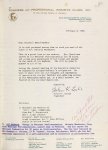
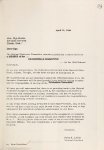
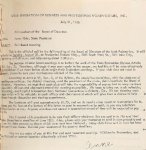
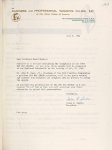
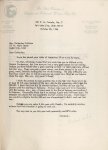
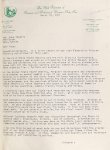
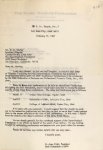
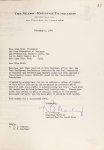
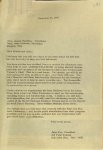
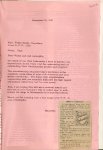
Show CONGRESSIONAL RECORD 21800 of the broker or the net in of the earnings come of the multiple 6. THE FAm listing service? HOUSING BOARD We view the provisions of section 408 cre the Fair Housing Board and vesting Department of Housing and Urban De ating the broad investigative powers to outweigh any of the ameliorating provisions inserted by the House Judici,ary Committee and later the House in its consideration of Title IV. When this section was approved by the House Judiciary Committee the Fair Housing Board was hailed by its sponsors as a con ciliatory mechanism which would keep con troversies out of the courts and reduce liti gation to a minimum. Yet the word "con ciliation" does not appear in section 408 nor is there any language which even implies that conciliation is its objective. It is modeled after the National Labor Re lations Board yet the investigative powers vested in the Secretary of Housing and Urban Development includes powers of subpoena. and investigation even in the absence of a. complaint. Section 408 incorporates by ref erence numerous provisions of the United States Code relating to the National Labor Relations Board and presumably brings into play the numerous court decisions; for these will surely be interpreted as widening the powers Of HUD and the Fair Housing Board as these dectsions did for the National Labor RelaJtions Board. It would be extremely naive for anyone to assume that Title IV, as approved by the House, represents even a modicum of satis faction on the part of the proponents of an all forced law. encompassing housing Should Title IV, as approved by the House, be cleared by the Senate and signed into law, the ink will not be dry on the Presi dent's signature before the Civil Rights Bill of 1967 will begin to take shape. Thus in our considered opinion the Sen alte is not being asked to vote on a final so called compromise version 01' an open occu pancy statute, but in reality a first install ment. Enactment of Title IV involving new construction and multi-family housing does not remove the homeowner and the owner of a one- to four-family rental structure from the target area; indeed, the enactment of the limited Title IV will serve as the cat alyst f'Ol' perennial concerted efforts to en large its scope to bring all homeowners and owners of rental property within the reach of the Federal Fair Housing Board's writ. velopment with as so onerous as If we have any doubt of this, we should consider the action the Senate took yes terday in practically eliminating all ex cePtions to the minimum wage bill. When the bill was originally passed, many people were excepted. However, there are now probably only a few hun dred thousand. I continue to read from the letter: The United States Senate stands aJthwart the ambttton of those wnowouid tempt the United States Supreme Court to rewrite the Oonstrtutdon so as to make an American an unwilling partner to a contract involving the disposition of his privately-owned residen tial real propert. Rejection of Title IV by the Senate will' sound a most heartening note-s-a note unheard for more than a gen eration-that there are some deeply-rooted Oonstitutional guarantees that cannot be erased even under the apparently magic toc sin of "civil'rights". contemplated elimination of I Federal discrimination from juries. the However, proposed means for achieving this end represents a patent example of "throwing the baby out with the bath water." By eliminating the of the traditional preliminary ques tionnaires, persons normally disqualified or exempt from jury duty will be placed use in the "master jury wheel," selected, and required to come to court only to be ex cused. This will not only cause a waste of time in an already slow judicial proc ess, but will also result in a spiraling of court costs. Still more objectionable is the selec On the tion process of Federal juries. one hand, the bill requires jurors to be selected at random from 'voter registra tion lists, while on the other it recogn izes that a Iuror. must be able to read, Inas write, and understand English. much as the 1965 Civil Rights Act abol ished literacy tests for voters, it is a foregone conculsion that many voters voters whom this bill contemplates being selected for jury service-will neverthe less be disqualified as illiterate. This will cause more wasted time and will create bitter disappointment which may likely be manifested by further unrest and even riots in the street. Under both the Federal and State con stitutions, jury service has traditionally represented a duty imposed only when a citizen meets certain qualifications, whereas voting represents a right. The citizen may exercise his voting right wisely or foolishly-indeed it completely. may ALAN L. EMLEN, Chairman, Realtors' Washington Committee. Up to this point, I have discussed my objections to title IV of the bill. Let turn for a moment to certain other features of the bill which I think are objectionable if not unconstitutional. ignore such individual willfulness or personal impunity attaches to the jury burden. The duty and right in these cases are simply not analogous, But no TITLE II-STATE JURIES Title II seeks to deal with alleged dis crimination in State jury selection. For over 100 years it has been illegal for StaJtes to discriminate by reason of race. Consequently, title II represents an un warranted and unneeded invasion into States rights. Section 201 declares that no State may base jury selection on "eco nomic status." 'rhis would invalidate the requirement in many States that be jurors property owners. always been recognized that jury duty could be imposed by the State only if the citizen met the State's qual It has ifications. For instance, 10 of the 13 Original Colonies required their jurors to hold property, either real or personal. Today's litigation far surpasses that of the 18th century in complexity; yet, the administration's bill would require less responsibility from a State's jurors than was demanded in 1789. TITLE III-INJUNCTIVE POWER In title III, the Attorney General would be empowered with authority to institute his own action unsupported by formal complaint, whenever, he feels Respectfully yours, me TITLE I-FEDERAL JURIES Title "reasonable September 15, 1966 SENATE - he has grounds," whatever that means. The remedy he, would seek is the injunction, the most powerful and often the most abused of all legal remedies. This would give the Attorney General power to intervene without a formal com plaint based on something as vague as "reasonable grounds." This provision is a stark contradiction of our Anglo-Amer- ican concept of jurisprudence based on the "preponderance of evidence" and trial by jury. It has always seemed a little incon gruous to me that the men who support bill which contains such broad a. injunc tive power for the Attorney General fight very hard to protect labor unions from any use of such Injunctive power. This bill would make sweeping changes In the Federal and State jury sys tems WIthout any, adequate consideration of the effects or deSirability of such changes. The bill would create new crimes in language so vague and com plicated that no one'. can say for certain just what it means. This bill would in vite and actually subsidize, a flood of . bot litigation consisttng substantially nuisance injunctions and grudge suits. LAW of GROUPS NOT CONSULTED These changes would be brought about without ever having sought or considered the views and opinions of the American Judicature Society, or the American Bar Association, or the Administrative Office of the U.S. Courts, or any judicial con. ference. This bill embraces the principle that a man may be punished, may have sanc tions applied against him, may be de prived of substantial rights, without a trial by jury. This is contrary to all the basic principles of justice which we hold dear. As a nonlawyer, I admit I am not qualified, as I said in the beginning, to give final and valid opinions on the con stitutionality of such drastic revisions in basic law. However, it seems to me that the dangers are so obvious that even those of us who are not trained in the law can see them. Thus, it seems that the proposed change would strike fear in the hearts of every property owner in the United States of America. Mr. President, without any hesitancy I voted against cloture on H.R. 147605 yesterday and will do it again on Monday, when it comes up. I do so with complete faith that the majority of the people of my State of Utah, as well as the 'people of the other 49 States, would oppose this legislation if they could see it clearly and could get an oportunity to understand it. I hope this bill will be rejected, and that in the course of the discussion, the understanding of the dangers involved will become so clear to the American peo ple that if and when it is brought up again in 1967, the will of the people will be made known to us more clearly and more swiftly than has been the case today. I hope that this bill not only will be overwhelmingly defeated, but also that it will be confined to that limbo which all such bills so richly deserve. Mr. President, I yield the floor. |