| OCR Text |
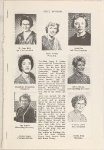
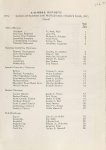
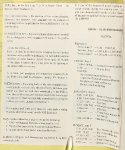
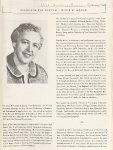
Show CONGRESSIONAL RECORD as what is "a feasible solution" for clas sifying the help wanted advertisements. In the first place, the experience of those newspapers which do not segregate their job ads by sex headings shows that sex-segregated help wanted ads are not essential to effective job advertising. Secondly, it is the Congress, not the classified ad managers of the newspapers, that writes our The law Nation's laws. prohibits employers, employment agen cies and unions from publishing job ad vertisements "indicating any preference, discrimina limitation, specification, or tion, based on race, religion, sex or na tional origin." The sex headings over the job ads constitute a direct violation of that prohibition. The EEOC's sanc of these headings tion as a device to evade the law is nothing short of disre for the law and total insensivity to gard the adverse effects which those headings exert on equal job opportunity. Thirdly, Mr. Holcomb's statement that section 704(b) "is not applicable to the policies of the newspapers in classifying advertising" is another of his irrelevant The fact is that the law assertions. apply to the job advertisements made by employers, employment agencies and unions who are covered by title VII. It is they who are covered and it is they does who are responsible for violations of the If newspapers insist on putting job law. ads in columns headed "men" only or "women" only, then at least the EEOC headings are proper sex en-appointed by the President under but race headings are always discrimina Executive Order 11126. seeking a Negro to act in a movie dealing the Ladies' Home Journal. tory. For example. an employer who is with the history of Negroes, or to work in a Negro neighborhood as an investi gator for a detective agency, may be in terested in the employee's being necessarily without race motivated by race discrimination. Congress recognized the commonsense fact that there are some instances in which the sex of the employee is a bona fide occupational therefore made an qualification, and exception for sex labeled advertising in such cases. I want to make it very clear that I am not com plaining about cases involving bona fide cases In qualifications. occupational such the law permits sex labeling right What I am in the middle of the ad. Its chairman is Miss Margaret Hickey, senior members as are editor of Its other 19 follows: Mrs. Ellen Boddy, civic leader; Mrs. Mary E. Calla han. executive board member of the In ternational Union of Electrical, Radio, Workers, AFL-CIO; Dr. Machine and Henry David, head of the Office of Sci ence ence Resources Planning, National Sci Foundation; Mrs. Elizabeth Wick enden Goldschmidt, consultant on social welfare; Mrs. Anna Roosevelt Halsted, a civic leader and the daughter of the late lady of the world, Mrs. Eleanor Roosevelt; Miss Dorothy Height, presi first dent of the National Council of Negro Women; Mrs. Viola H. Hymes, chairman of the Governor's Commission the on Status of Women, Minnesota, and for complaining about is the EEOC's sanc mer tion of sex headings over columns of ads ish Women; Mr. Maurice Lazarus, vice bona fide chairman of the Federated Department for jobs which do not have a occupational qualification based In the absence of a proper on sex. bona fide occupational qualification it is plain that the law set up the same standard for the use of sex labels and race labels in job ad namely. that there shall advertising which indicates "any vertisements; be no limitation. preference, specification or discrimination, based on race or sex." The fact of life is simply this-that the result of using the label "men" only or "women" only for jobs that ought to president, National Council of Jew Stores; Dr. Richard A. Lester, professor of University; at Princeton economics Miss Margaret Mealey, executive direc tor of the National Council of Catholic Mr. Women; Norman Nicholson, vice president of Kaiser Industries Corp.: Dr. president of Barnard College; Miss Marguerite Rawalt, a dis tinguished attorney and a former presi Rosemary Park, dent of the National Federation of Busi ness and Professional Women's Clubs; Mr. Edward A. Robie, vice president and personnel director of the Equitable Life Assurance Society of the United states; should see to it that such ads relate only It is to jobs not covered by title VII. be, and can be, performed by either traditional discriminations based on sex Mrs. Mary Roebling, president and chair by job ads to be published in a manner that that title VII was specifically designed to man of the board of Trenton Trust Co.; prevent. Mr. William EEOC's duty to insure that those covered the act do not permit or cause their man or a a is to perpetuate the woman, that if the One would suppose, from the lack of evasionary inter pretation, and lays down a firm ruling against sex segregated job advertise understanding displayed by the EEOC violates the law. EEOC stops its I am sure own ments, the newspaper industry will com ply with it. Moreover, I believe the in dustry will also find that its compliance is not as revenues destructive to its advertising as Mr. Holcomb's letter im Mr. Holcomb tries to distinguish sex labeled job advertising from race labeled job advertising by saying that although some job categories are "of particular interest to members of one sex or the other, this cannot be said of job classifi cations by race." I agree that race label ing generally tends to cause discrimination and is intended for that purpose. As the Supreme Court pointed out in Anderson v. Martin, 375 U.S. 399, 402 (1964), the label "furnishes a vehicle" for arousing discriminatory prejudice. However. Mr. Holcomb goes overboard in 222-168-3703 Officials, that the Commission's sex ad vertising guidelines vertently or were without issued inad having adequate advice about them. I want the House to know that the Commission's sex advertising guidelines were were plies. . asserting that They not issued inadvertently. promulgated in fiat disregard of the views of the Citizens Advisory Coun cil on the Status of Women-in fiat dis regard of the views of other Government agencies which administer similar laws in fiat disregard of the views of promi nent business leaders-and in fiat disre- gard of the experience of various newspapers operating under state laws which forbid employment discrimination on the basis of sex. THE CITIZENS ADVISORY COUNCIL ON THE STATUS OF This Council WOMEN consists of 20 distin guished private cltlzens-s-men and wom- treasurer, F. Schnitzler, AFL-CIO; Dr. secretary Anne Firor Scott, associate professor at Duke Uni versity; Dr. Caroline Ware, distinguished civic leader; and Dr. Cynthia C. Wedel, assistant general secretary of the Na tional Council of Churches. On October 1, 1965, the Citizens Ad visory Council sent policy to the EEOC. a memorandum on I want to emphasize that that memorandum was approved by the Inte;departmental Committee on the Status of Women, which consists of the of Attorney General and the Secretaries state, Defense, Agriculture, Commerce, Labor, Health, Education, and Welfare, and the Chairman of the Civil Service The Council's memoran Commission. f01dum on policy stated-page 8-as lows: Under section unlawful ployer, 704(b) of the Act, it is an employment practice for labor organization or an em employment agency to publish any advertisement which indicates any preference, limitation, specifi cation, or discriminatIon as to sex, wIth only |