| OCR Text |
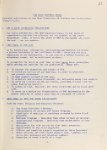
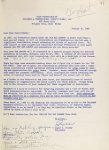
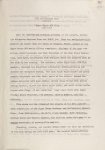
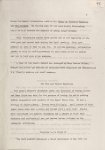
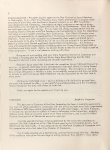
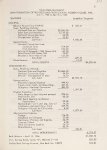
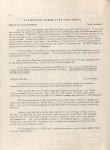
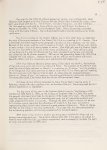
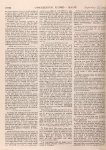
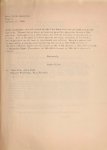
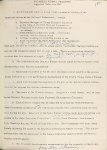
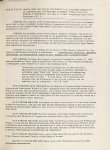
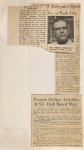
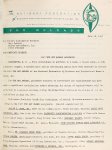
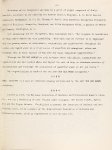
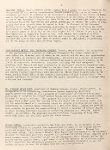
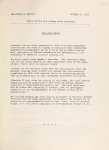
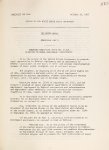
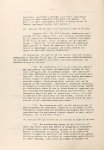
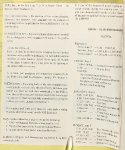
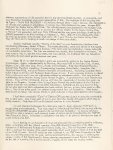
Show CONGRESSIONAL RECORD 6 ess and equal protection of the law guar fused court cases denying claims of wom antees of the 14th and 5th amendments en There is of the U.S. Constitution. rea to believe, at long last, that women protected by the Constitution from son are to equal protection under the Consti tution. Those cases are summarized in the "Report of the Committee Civil on and Political Rights," President's Com The mission on the Status of Women, appen President's Commission on the Status of dix B, U.S. Government Printing Office, Women stated in its 1963 report "Ameri 1963. discrimination. class arbitrary can Women," page 44 of Equality or female, is and its commitment mocracy all law for under the rights persons,. male basic to de so ulti to the mate valueor the individual that it must be reflected in th rundamental taw of the land. The Commission believes that this principle is embodied in the 5th and 14th of equality Constitution the to amendments of the United States. It should be noted that the Attorney signed the 1963 report on There is every for women will be extended to areas oth On February 23, than jury service. 1966, the Los Angeles MUnicipal Court stated that a California law prohibiting er women from working as bartenders-al though the law permitted them to serve liquor in the lower paid jobs as wait resses-would likely be found by a higher court to be inconsistent with the amendment, "American Women." L.A. This view was adopted and approved discriminating law Alabama the that agalnst women in j!lry service in State courts is. unconstitutional. The court id-White v. Crook, 251 F. Supp. 401, M.D. Ala. Feb. 7,1966: -Amendmerrt was not historically intended to women eligible to make states the require Fourteenth the that argument The fr jury service reflects a misconception of the. funtion of- the Constitution and this read to The obligation in interpreting it. Court's of the United States must be Constitution embodying general principles meant as society govern institutions the and of to believe that Mun. California ct. Cases 6567, par. 9015. 14th amend The protections of the ment Labor 53 247955; No. 14th Gardner v. Equal Protection Clause are in cluded in the Due Process of Law guar Bolling antee of the fifth amendment. v. (1954). Sharpe, 347 U.S. 497 EEOC is required to The act in conformity with these constitutional provisions. The EEOC's advertising guidelines of April 22, prescribe 1966 which permits an standard a employer to indicate to the publisher his preference as to the sex of desired applicants for a job, and to cause the ad to be printed or published under a column heading which specifies The ruling affirmatively condones the continuation of outmoded and prej sex. government as they evolve through time. It is therefore this Court's function to apply udiced concepts of restricting women to the Constitution as a living document to the "women's legal and cases When such rary society. the in facts contempo controversies of this case an is application to made, the con ciusion is Inescapable that the complete ex clusion of from women jury service in Ala bama is arbitrary. * * women The * the Alabama right 'to on work." Commission's The formally announce a Federal policy which deliberately per guidelines thus petuates discrimination against women, in direct contradiction to section 704 (b) This ac of the Civil Rights Act of 1964. that denies tion is inconsistent with the fifth amend juries in the ment of the U.S. Constitution. statute serve It is no that different than the regulation or guideline .provlsion of the Fourteenth· Amendment to issued by the Interstate Commerce Com State of Alabama therefore violates the COfist1.tution of the United States that forbids -any state to 'deny to any within its jurisdiction the of the law.' tional equal protection The .plain effect of this constitu provision is to prohibit prejudicial disparities before the law. udicial person This means prej disparities for all citizens-includ ing women. On the basis of this decision, the cir cuit court of the First Judicial District of Hinds County, in Mississippi has ruled that a similar Mississippi jury exclusion law is also unconstitutional. Mississippi against Pendergaft. The White against Crook decision was cona dramatic departure from previous 222-168-3703 breaking letters from women trying to earn a living for their families who are equal job opportunity because denied mission permitting railroads to provide separate table service Negroes for in It is time for the EEOC they are women. to wake up to its responsibilities. this enlightened view of human rights General by- the three-judge Federal court in Ala bama on February 7, 1966, which held reason agencies and unions to comply with the prohibitions against discrimination in employment based on sex. I am sick of reading the many heart EEOC'S SPECIOUS EXCUSES The whining of Equal Employment Op portunity Commission members and offi cials has centered 'around three specific excuses for their attitudes: First. That the sex provisions of title VII were a "fluke," introduced by Repre sentative HOWARD SMITH, who is "conceived out of wedlock," and so forth. I reject that slur on Congress. Con had enacted the Equal Pay for gress Women Act in 1963 and was thoroughly familiar with the fact that job discrimi nation is imposed on women and inflicts consequences severe were the their on earning The sex provisions in title VII capacity. supported by the great majority of I also fought and Senate. House vigorously for the amendment, and I have received many commendations on sex bias my fight for the adoption of the prohibition. Congressman SMITH and I have disagreed on other civil rights bills, but I certainly welcomed his support of the sex provisions in title VII to give to women-white women as well as Negro women-full and equal opportunity to seek and keep jobs to support themselves and their families. when Since is it permissible for motive of the author of legislation as an excuse for not enforcing the law? Are all who they imputing a base motive to voted for the law? I recommend to executive branch offi selves look foolish by discussing the mo them cials that they should quit making who tives of the Members of Congress with voted for the bill and should get on the business of enforcing the law. valid by the Supreme Court in H ender son v. The United States, 339 U.S. 816 some The whole attitude the of toward discrimination based on specious, negative, and arrogant. EEOC sex is The Commission is failing in its duty to edu cate the public toward compliance with the law, to inform working women of their rights under the law, and to show of an affirmative and positive attitude enceuraging employers, employment an charged with the duty of en forcing a law, to allude to the assumed agency railroad dining cars, which was held in (1950). no friend of the civil rights movement, and Second. The second excuse used by is no EEOC officials is that there legislative history on the sex provisions intent of in title VII, and that the It is so shrouded in doubt that Congress is impossible to interpret and te administer the law. to this The EEOC officials who resort to effort the excuse just have not made read the extensive legislative htstorv of the long battle to eliminate sex discrimi nation in employment. |