| OCR Text |
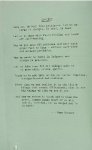
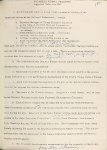
Show one exception-when is a bona fide occu sex for employment. patlonal qualification at the lack of com The Council is alarmed provision as evidenced by in sex-segregated the continued advertising this pliance with Separate newspaper columns. "help-wantd women" cOlumns. In men" and "lielp-wanted to advise prospecttve newspapers serve only are applicants not to apply where they job not wanted, thus Moreo¥er, tion. columns to employers which uninten placing an employment man or a woman as advertisement in indicates which column preference unless they a sex a show that being a can the case may be is a bona qualification for the job. The coopera tion of the newspapers should also be sought. the The Council belleves that the adoption by EEOC of a firm position on advertising would yield ready eooperatton from the newspapers. The Phoenix Gazette and the Honolulu» Star-Bulletin, for example, no longer segre (The gate their employment advertisements. advertising provisions show that the in and Arizona employment laws are similar to Where an employer can law.) sex is a bona fide occupati.onal qualification, the sex limitation could be ex pressed in the individual adverti.sement. of discontinuance The sex-segregated newspaper columns would also help to elimi nate sex discrimination in employment not Moreover, the lack of a covered by Title VII. strong Federal position on advertising may hamper eff'ective tmpsementatton of advertis ing provisions of State fair employment laws which do not have numerical limitations of coverage. OTHER GOVERNMENT AGENCIES on Human Relations is the agency charged with administering the District of Co employment fair regulation Article 47,10 R.R.L. Report No. 944. Sec tion 4(d) of that ordinance has language concerning discriminatory advertising which is identical with section 704(b) of title VII-indeed, it was copied from that section. The District of Columbia Coun cil had no doubt as promptly issued a to its meaning and ruling-news release of July 14, 1965-as follows: In response to questions from employers, the Council has stated that the advertising of positions as "IIelp Wanted-Men," "Help Wanted-Women", and is in violation of the new Regulation unless the positions in volved are such that "sex is a bona fide oc cupational qualification reasonably neces sary to the normal operation of the particular bUSiness or enterprise." The Civil Service Commission, which operates its job advertising programs 222-168-3703 and Title VII"-34 George Washington designated * The Civil Service Commission's by sex. ure * the problems of * unique practice should certainly provide a meas has as been women are generally not as assumed. That manifestations of racial prejudice have been of guidance for the EEOC in under brutal more than the more subtle manifestations of prejudice by reason of sex standing and interpreting the congres in no way diminishes the force of the equally sional purpose set forth in section 704(b) obvious fact that the the rights rights of women and Negroes are only different of phases of the fundamental and indivisible issue of human rights. difficulty in understanding section 704 (b). For example, the vice president of versal Declaration of the National Association of Manufactur stress respect human ers, Mr. Charles Kothe, conducted semi damental freedoms for all persons without The United Nations Charter and the Uni distinction nars on title VII for businessmen all over gion. the country, at which he stated unequiv Attention: Help Wanted Advertisers. it will be unlawful to discrimin.ate among employment applicants because of sex unless this is a bona fide oc cupation requirement. This is one of the provisions of the new Oivil Rights Act and is covered in Title VII, section 704 (b ) of the Act. No reference to sex should be made in your ad unless necessary for the performance of the job. The Phoenix, Ariz., Gazette and the are other news Honolulu Star-Bulletin papers that unfair stopped the have practice of separate columns of job ads They operate under for men and women. which are similar to title VII of the Fed erallaw. What, then, is the reason for the EEOC's blatantly disregarding the law, the advice and guidance they received from responsible sources, and the good experience of newspapers which abstain from sex-segregated discriminatory job advertising? Is it because the Commission does not want to recognize that women's rights Or is it an uncon are human rights? scious desire to alienate women from the Negroes' civil rights movement? . rights cannot be divided into competitive pieces. The importance of prohibiting all forms of discrimination, Human including sex discrimination, in fair em ployment legislation, is being more and more recognized. The December 1965 issue of the George Washington Law Re view contains Murray and Crow and the a thoughtful article by entitled "Jane Eastwood Law': Se" Di&crimJntiQn both fun language, or reli enactment of the Civil designed to eliminate discrimination. practical matter, "civil rlghts" had be come equated with Negro riglits, Which created bitter oppositions and divisions. The most serious discrimination against both women and Negroes today is in the The addition 0:11 "sex" field of employment. to Title VII of the Civil Rights Act, making it possible for a second large group of the population to invoke its protectlon against discrimination in employment, represents an important step toward implementation of our commitment to human riglits. tions Ef July 2, 1965, to race, sex, the Rights rights and Human As a lowing notice: fective as Until for Rights Act of 1964, "sex" generally had net been included with "race, color, religi.on and national origin" in federal laws and regula ocally that the law forbade advertislng in sex segregated columns. Prior to the effective date of title VU, the Blade and Toledo Times, two news papers in Toledo, Ohio, stopped the pub lication of separate columns of job ads for men and women and printed the fol advertising provisions in the Arizona and Hawaii State fair employment laws The District of Columbia Council lumbia aware, advertise in columns the EEOC's disregard of that guidance. Business spokesmen certainly had no encourage EEOC make The Council urges that the law prohibit,s clear to employers that the the Federal Law Review 232, 235, 256-which states: sex-segregated newspaper nities of both men and women. Hawaii fair under provisions of law prohibiting sex discrimination, does not, so far as I am discrimina perpetuating on jobs, place a sex label tionally, restricts the employment opportu fide 5 of title VII, and I see no justification for actually newspaper CONGRESSIONAL RECORD . Hopefully, our economy will outgrow con cepts of class competition, such as Negro v. white, youth v. age, or male v. female, and, at least in matters of employment, standards of merit and individual quality will control prejudice. rather than Studies have demonstrated that the discrimination burdens of ment of women are in' emplov similar to the bur dens of racial discrimination. Congress adopted the same requirements of law to prevent both types of discrimination. There is utterly no justification what ever for the EEOC to interpret the same language of section 704(b) in one way as applied to race discrimination and in the very opposite way as applied to sex discrimination. The Commission's ac so is nothing more than arbitrary arrogance, disregard of law, and a manifestation of flat hostility to tion in doing the human rights of women. EEOC GUIDELINES IS NOT ONLY UNLAWFUL-IT IS UNCONSTITUTIONAL The EEOC guidelines of April 22, 1966, permitting job advertising in separate columns for men and women encourages violation of the law which the EE9C was set up to enforce. It also violates the the Constitution. fifth amendment of All government officials-State and Federal-are obligated to carry out their duties in compliance with the due proc- |