| OCR Text |
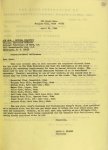
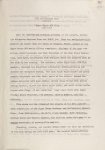
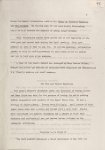
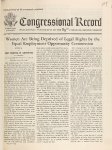
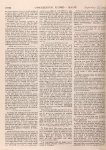
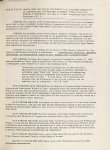
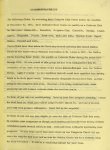
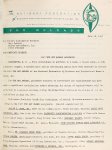
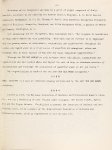
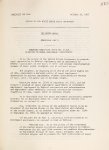
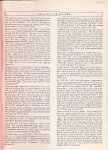
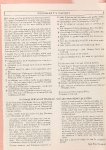
Show Q:ongrcssional Rccord United States PROCEEDINGS AND DEBATES OF THE oj America 89th CONGRESS, THURSDAY, SEPTEMBER 15, HON. WALLACE F'. BENNETT· OF UTAH IN THE SENATE OF THE UNITED STATES CIVIL RIGHTS ACT OF 1966 SECTION HOUSING OF Mr. EVERY VIOLATES PROPERTY AMERICAN CITIZEN BENNETT. Mr. RIGHTS President, ap parently, in spite of the failure to secure cloture yesterday, the advocates of H.R. 14765 want to continue the discussion. The weaknesses of the bill have been presented to the Senate by many men much more able than I. Probably the most serious criticism that can be made of the bill is that it is of very doubtful constitutionality. Not being lawyer, I must yield to my colleagues who are to make the basic points against the bill in this field. All I can do is reinforce what they have had to say. Since it has been obvious for some time that the bill could not be forced to a vote through cloture, many of the pro ponents of the bill have turned from a discussion of its merits to an attempt to fix blame for its defeat. One favorite device has been to try to lay the whole burden of their failure on the shoulders of the minority leader. Two years ago when another civil rights bill was up, the final burden of carrying it for the ad ministration rested on these same shoulders. I voted with him for that bill. That bill had substantial merit; this one is so bad that even with his great personal devotion to civil rights, the minority leader has not accepted it and in the spirit of fundamental loyalty to constitutional rights on which our country was founded and with great courage, he has chosen to lead the op position. ItlOTS HAVE CAUSED PUBLIC In my INDIGNATlON opinion, the responsibility for the defeat of this bill must rest upon those who have incited condoned and participated in the raciai riots that' have bcn erupting in many cities and are stIll occurring. These leaders both Wite and Negro, claim the privilege of USIng the power of lawlessness to threat en Congress into passing a bill of doubt The whole atmosphere of exercise, from the riots to the bill is that the end justifies the means. Hav h:g fallen into the pattern of a civil rIghts bill every year, each new one must legality. fu thts e ushed further beyond the responsible lts of sound policy and practice. I think it is past time when Congress shOUld slow down and lift the problem out of the political realm, giving more ful attention to the long-range irn Ications of its action, both on the great majority of the American people as well as on any racial minority. SUPPORT OF PRIOR CIVIL RIGHTS BILLS Let me say at this point that I fully believe in protecting the rights of mi nority groups and that my record in suport of prior civil rights bills in the Congress will substantiate this fact. However, we reach a point in the course of events where we must weigh the de mands of minority groups against the constitutional rights of the majority of our population, and determine what is just and right as against that which might be socially desirable. Because one man wants or desires something which his neighbor has, does not give him the right to possess it. The Ten Comandments clearly sets forth that a man has no right to lust or covet after that which belongs to his neighbor. POWER VERSUS FREEDOM The advocates of legislation such as that contained in title IV, argue that freedom involves the right to live wher ever one chooses, or to buy whatever one wishes to buy. This is a fallacious argu ment and a tortured usage of the term "freedom." If I have the right to live wherever I might choose, then someone else must have the duty to permit me to If I prefer my neighbor's home do so. to my own, do I have the right to force him to sell to me? Obviously, I do not possess any such right in free country under a constitutional form of govern ment. Anyone who claims to possess any such right is patently wrong, and is talking about power not freedom. In a free country no one has a right What he has is a right per se to buy. to offer to buy. Likewise, if a proposed seller is a free man, he has the right to offer to sell or to refuseto sell as he may It is an elementary rule of law see fit. that a completed sales transaction oc curs in a free country, only when a will ing and able buyer bargains with a will ing and able seller and they negotiate on terms which are mutually satisfactory. Such would not be the case under title IV. It would destroy the freedom of one man and place power in the hands of another by forcing the sale or lease of private property. To speak of this pow er as freedom is a gross distortion of the constitutional principles on which this great Nation was founded. LET US NOT BE FOOLED Let us not misunderstand and let no one be misled into believing that this bill will satisfy the basic needs of minorities or of those who are in the ghettos. Their real needs are for jobs, or training for jobs, if they are not properly trained. Their real needs are proper education, ability to purchase adeqqate housing, and SECOND SESSION 1966 No. 156 solutions to other basic problems of in come. Measures like this bill are not go ing to encourage the basic individual in itiative of all American citizens, includ ing those who live in the ghettos, to get out and earn a living and to make a way for themselves in America. Private en deavor, not government compulsion has been the touchstone of greatness of our Nation. The fundamentals of our Nation's ghetto problem are not really dealt 'with in this legislation. Let Us not try to fool anyone into believing that all civil rights problems are going to come to an end if this bill is passed, any more than they did when Congress enacted bills on civil rights in 1957, and 1960, 1964, and 1965. This bill will not in its present form accomplish its advertised objectives. This is not going to bring about the mil lennium or the solution of the plethora of problems relating to the ghettos today. This is not going to settle the riots. TITLE IV MOST OBJECTIONA.BLE Title IV of H.R. 14765 is the most ob jectionable part of the bill. This title embraces the most danger ous attack on the right of private prop erty which has ever been seriously at tempted in this body. By enacting this title, we shall be seek ing to deny large numbers of Americans the right to dispose of their own property as they see fit. Of course, this invasion of the right of private property would be made, under this bill, broadly speaking, only with re spect to homes and living quarters. I fail to see where this makes the case any better. In a way, it makes the matter worse, because one of our most sacred traditions, which we inherited from and share with the British, is the idea that a man's home is his castle. Let no Senator be misled into accept ing the idea that all the evils of title IV will be visited only upon those who are in the business of building, developing, selling, renting, or leasing dwellings. Of course, that is what the bill says; but the bill contains a section entitled "Defini tions" under which it is provided that anyone shall be deemed to be in this business of building, developing, selling, renting, or leasing dwellings if he has, within the preceding 12 months, partic ipated as either principal or agent in three or more transactions involving the sale, rental, or lease of any dwelling or any interest therein. So, a woman who runs a boardinghouse and rents three rooms during the year is in the business; a man who gives up a job in one State, and moves his family in a rented trailer to a job and home in an other State,let us say a man employed in |