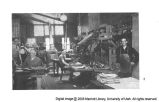
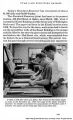
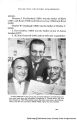
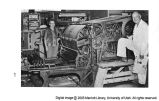
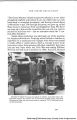
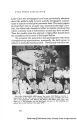
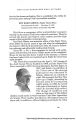
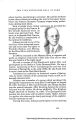
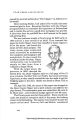
| Show CHAPTER TWELVE The Offset Revolution In the early 1960s interest of newspaper publishers across the land focussed on the attractive possibilities of an old pro cess -offset printing But no more thanhandful even suspected how it would eventually change production methods Few had given even passing note to the January 22 1937 emergence of the News in Mount Vernon New York as an offset product Only an isolated visionary here and there observed the December 1939 introduction of the Opelousas Louisiana Daily World as an offset paper Perhapsfew other far-sighted newsmen would have converted their publications in that era had not the advent of World War II curtailed newspapers exploring offsetpossibilities After the war some commercial printers many of them also publishers of small-town community newspapers began to use offset on sheet-fed presses When done with skill it was of better quality than well-produced letterpress printing Among its advantages was the elimination of engraving for halftones and special art But in its early stages before the advent of phototype contained similar to Offset offset required good proofs of the hot metal type it and consequently makeup of the job was somewhat the preparation process for printing by letterpress was actually an old idea Like its precursor lithog raphy itbased on the fact that grease and water donmix Alex Senefelder German inventor turned that physical principle into the lithographic printing process in 1798 He used stones asprinting surface since his idea was slightly earlier than the first crude presses Actually the two came about in nearly the same time frame but linking them together was not an overnight occurrence During nearly two subsequent centuries of development evolution of the science including sophisticated presses has led to todaycombination 223 Digital image 2005 Marriott Library University of Utah Al rights reserved |