| OCR Text |
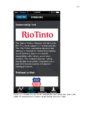
Show 334 Antihumanism: Rethinking Rhetoric, Argumentation, and Social Change in an Age of Corporate Subjectivity Corporate subjects are here to stay, and they necessarily move rhetoric and politics beyond humanism and the misleading lure of "intentions" when trying to understand rhetorical force and social change. Despite some potential discombobulations and schizophrenic hangovers, let us take one final step back to realize a few important contributions to the study of communication: 1) The concept of the corporate persona lends itself to future research about corporate subjectivity 2) Argumentation is purely a matter of force, and this updates argument research 3) There are new possibilities for social change. The Corporate Persona First, this dissertation has realized that corporations have personas since their forces are capable of producing affective relations that give them personality. The simplest demonstration of this is the logo, which evokes irreducible emotions about what the corporate subject looks like, what it feels, and what sort of lifestyle it offers new recruits. The corporate persona, though, was also evident in the context of legal disputes and in the community. During the postwar period, trains and their corporate entities - particularly the Big Four - were characterized as greedy, selfish, industrialists who would do whatever they could to maximize profits, even at the cost of inflicting violence upon marginalized communities and trading off the rights of equality with those whom it was designed to protect: freed Black slaves. Trains had persona. The concept of corporate personification is unique to the constitutional corporate subject because it has helped legalists, and rhetorical critics, grapple with the ways |