| OCR Text |
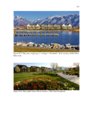
Show 220 purchased their first home. They enjoy the trails, the communal atmosphere, and the fact that their kids can walk to school. "We know our neighbors and we love being outdoors," said husband and father Corbin Hoenes (qtd. in Gray, 2015, para. 6). The Hoeneses could not be happier with the design of Daybreak, which has fostered a friendly, communal environment where neighbors meet and exchange conversation on front porches. When asked if they would ever consider moving, the family said: "Of course, we have looked [at] other places. But there is nothing out there that compares in amenities, lifestyle and design. And we would have to settle for a brown stucco house elsewhere" (qtd in Gray, 2015, para. 8). The fact that Daybreak is a suburban community, however, may lead some to conclude that Daybreak is less about community and more about manufactured living, which may potentially render the Hoenes's experience superficial or even a "false" sense of community. Joan McAlister (2009, 2010), for instance, has argued that suburban communities are an exemplar of the "rootless" communities that Simone Weil (1949/2001) talked about in The Need for Roots. The problem of rootlessness is one involving a lack of "foundations, origins, and histories" (McAlister, 2009, p. 108). Consequently, American communities have developed a loss of place and have yearned for a rebirth of political communities that are once again more rooted and better connected. As McAlister argues, suburban communities have attempted to become solvents to this crisis by producing a material aesthetic where residents can enjoy "the good life" that was promised to them by the American Dream. They are both everywhere and nowhere in "Middletown America" - a pantopic "perfect nowhere" (p. 119) that "rob[s] community members of that realm of action that best mediates human experience |