| OCR Text |
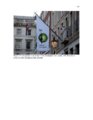
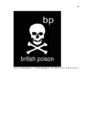
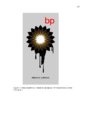
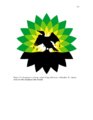
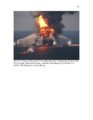
Show 285 Although Hayward attempted to prove that bp was responsibly addressing the crisis, the public perceived his verbal and nonverbal communication as indications that his personal life was more important than the crisis in the Gulf. This manifested in one PR disaster after another. As O'Connor (2011) said, "Hayward was not separate from BP; rather, he was BP" (p. 1985), and it did not help that he had a thick British accent, which allowed publics to pin him, and bp, as a foreigner that does not care about the consequences of oil drilling in the American homeland. The hatred towards Hayward is symptomatic of the fact that subjectivity is still regarded as distinctly human. Publics needed a human subject to grapple with the complexity of the bp corporate subject. Hayward was used as a scapegoat and took the blame for the harkening reality of corporate machines: they exceed reason, morality, and subjective singularity. Publics had to reduce bp to something human, and Hayward became the moral punching bag. He was the "public persona" (O'Connor, 2011, p. 1986) that became a metonymy for bp's corporate persona, which was regarded careless and evil. Additionally, the oil spill added fodder to the fire for publics and protestors eager to amp up their greenwashing rhetoric against bp's logo. Numerous consumers boycotted bp gasoline in "symbolic acts taken by people who are outraged and frustrated" because the image of bp as a "green, environmentally friendly company…was all for show" (Blake, 2010, para. 7). One group called Public Citizen mobilized a protest-by-boycott by asking its 1 million members to participate by taking their business to other gas stations. The campaign disseminated bumper stickers stating "AnyoneButBP" and according to the director of the program, Tyson Slocum, this group is not alone: "Boycotts are popping |