| OCR Text |
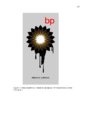
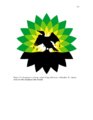
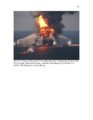
Show 301 people and environments. CSR videos of health and safety and the environment were more disliked than videos of the economy because it is most likely publics saw economic videos as instances of bp making good on its promises to selflessly help locals in the aftermath of the spill. Bortree also noted in a table of findings that all three categories of videos (health and safety, environment, economy) depended more on "rational" variables than "emotional" ones. The emotional variable was found in 35% of health and safety videos (65% rational), 30.8% in economy videos (69.2% rational), and 8.7% of environment videos (91.3% rational). Potentially this may in part explain why bp's PR campaign failed after the disaster: it still relied more heavily on logical arguments through the spoken word (logos) than visual arguments (pathos), which created a corporate persona that was attempting to act as a reasonable subject in the context of environmental devastation. It is thus quite possible, then, that bp did not produce enough affect to compete with the visual magnitude of the crisis. Even though bp may have intended to repair its damaged networks with renewed commitments to locally affected publics, it nonetheless could not repair the damage that was done from the oil spill. As De Wolf and Mejri (2013) observe, bp's post-Gulf PR strategy failed precisely because it focused on the [scientific] reality of the crisis rather than the [affective] force of its logo and brand name. Additionally, bp unsuccessfully restored credibility because stakeholders felt uninformed and vulnerable, and the company was viewed as reactive rather than proactive (De Wolf & Mejri, 2013). Thus, bp's post-Gulf PR strategy of constructing a singular, reasonable, moral subject may have damaged bp's networks further because it allowed affected publics to affirm their representations of bp as a misleading, greenwashing machine and |