| OCR Text |
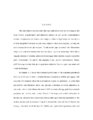
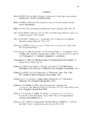
Show 61 Oreskes, N., & Conway, E. M. (2010). Merchants of doubt: How a handful of scientists obscured the truth on issues from tobacco smoke to global warming. London, UK: Bloomsbury Press. Pezzullo, P. C. (2003). Resisting "National Breast Cancer Awareness Month:" The rhetoric of counterpublics and their cultural performances. Quarterly Journal of Speech, 89(4), 345-365. Pfister, D., S. (2015). "A short burst of inconsequential information:" Networked rhetorics, avian consciousness, and bioegalitarianism. Environmental Communication: A Journal of Nature and Culture, 9(1), 118-136. Phillips, K. R. (1996). The spaces of public dissension: Reconsidering the public sphere. Communications Monographs, 63(3), 231-248. Phillips, K. R. (2002). Spaces of invention: Dissension, freedom, and thought in Foucault. Philosophy and Rhetoric, 35(4), 328-344. Pollan, M. (2002). The botany of desire: A plant's-eye view of the world. New York, NY: Random House. Rand, E. J. (2013). Queer critical rhetoric bites back. Western Journal of Communication, 77(5), 533-537. Rogers, R. A. (1998). Overcoming the objectification of nature in constitutive theories: Toward a transhuman, materialist theory of communication. Western Journal of Communication (includes Communication Reports), 62(3), 244-272. Rutenberg, J. (2014, October 17). How billionair oligarchs are becoming their own political parties. The New York Times. Retrieved from http://www.nytimes.com/2014/10/19/magazine/how-billionaire-oligarchs-arebecoming-their-own-political-parties.html Samples, J. (2010, September 27). The First Amendment guarantees the Citizens United decision. US News and World Report. Retrieved from http://www.usnews.com/opinion/articles/2010/09/27/the-first-amendmentguarantees-the-citizens-united-decision Scheufele, D. A. (1999). Framing as a theory of media effects. Journal of Communication, 49(1), 103-122. Scheufele, D. A. (2004). Framing-effects approach: A theoretical and methodological critique. Communications, 29(4), 401-428. |