| OCR Text |
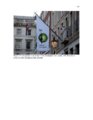
Show 8 Citizen Koch With an annual revenue of $115 billion, Koch Industries is one of the largest privately held companies in the United States, second only to Cargill. Owned and operated by petrochemical billionaires, Charles and David Koch, the Koch brothers have channeled billions of dollars into the American political system to influence decision makers through conservative advocacy groups, super PACS, and think tanks. The New York Times recently revealed that Koch plans on spending $889 million on the 2016 presidential and congressional campaign, a sum that easily exceeds the amounts that the Republican and Democratic political parties have ever spent in a single election cycle (Brinker, 2015). In what is already shaping up to be the most expensive election in history, with expenditures expected to surpass $8 billion (Lewis, 2015), the "Koch Network" is a harbinger of a new political era where corporations, not people, are the primary rhetorical and argumentative actors of social and political change. Koch Industries is an exemplar of how corporate subjects can use networks to become indiscreetly stitched into the fabric of American political life. As David Koch once put it, Koch Industries is "the biggest company you've never heard of" (qtd. in Schulman, 2014, p. 4). Koch Industries sells Brawny paper towels, Dixie cups, gasoline, fertilizer, and beef, among other mundane commodities, and it has fundamentally changed the way politics is performed. To Daniel Schulman (2014), author of the biography, Sons of Wichita, "a day doesn't pass when we don't encounter a Koch product, though we often probably don't know it. Koch Industries is omnipresent, but the Kochs managed to remain…under the radar" (p. 4). Koch is not necessarily a household name, but it has powerfully infiltrated political landscapes and intellectual thought by |